Chinese Holidays: The Complete Calendar of Major Festivals
 沉浸 TeamAugust 16, 20265 min read
Chinese holidays split into two calendars: traditional festivals that follow the lunar calendar and drift around on Western dates (Chinese New Year lands anywhere from late January to mid-February), and modern public holidays fixed to the solar calendar (National Day is always October 1). Here's the complete tour of the ones that matter, what people do, what they eat, and what to say.
The two calendars, in one minute
Traditional festivals are dated by the lunisolar calendar: months start on the new moon, and the 15th of any lunar month is a full moon. That's why the big family festivals (New Year's Eve reunion aside) cluster on full-moon nights, and why the "date" of a festival is something like "15th day of the 8th month" rather than a fixed Gregorian day. Modern civic holidays use the Western calendar. China runs both at once, and phone calendars show both.
Spring Festival 春节: the big one
春节 (Chūnjié), Chinese New Year, is the country's defining holiday: the largest annual human migration as hundreds of millions travel home, a week of public holiday, and traditions layered on every day. Falls in late January or February (February 17 in 2026). The essentials:
- New Year's Eve reunion dinner (年夜饭): the year's mandatory family meal, dumplings in the north, fish everywhere (鱼 yú sounds like "surplus")
- Red everything: couplets on doors, lanterns, new clothes; see why red
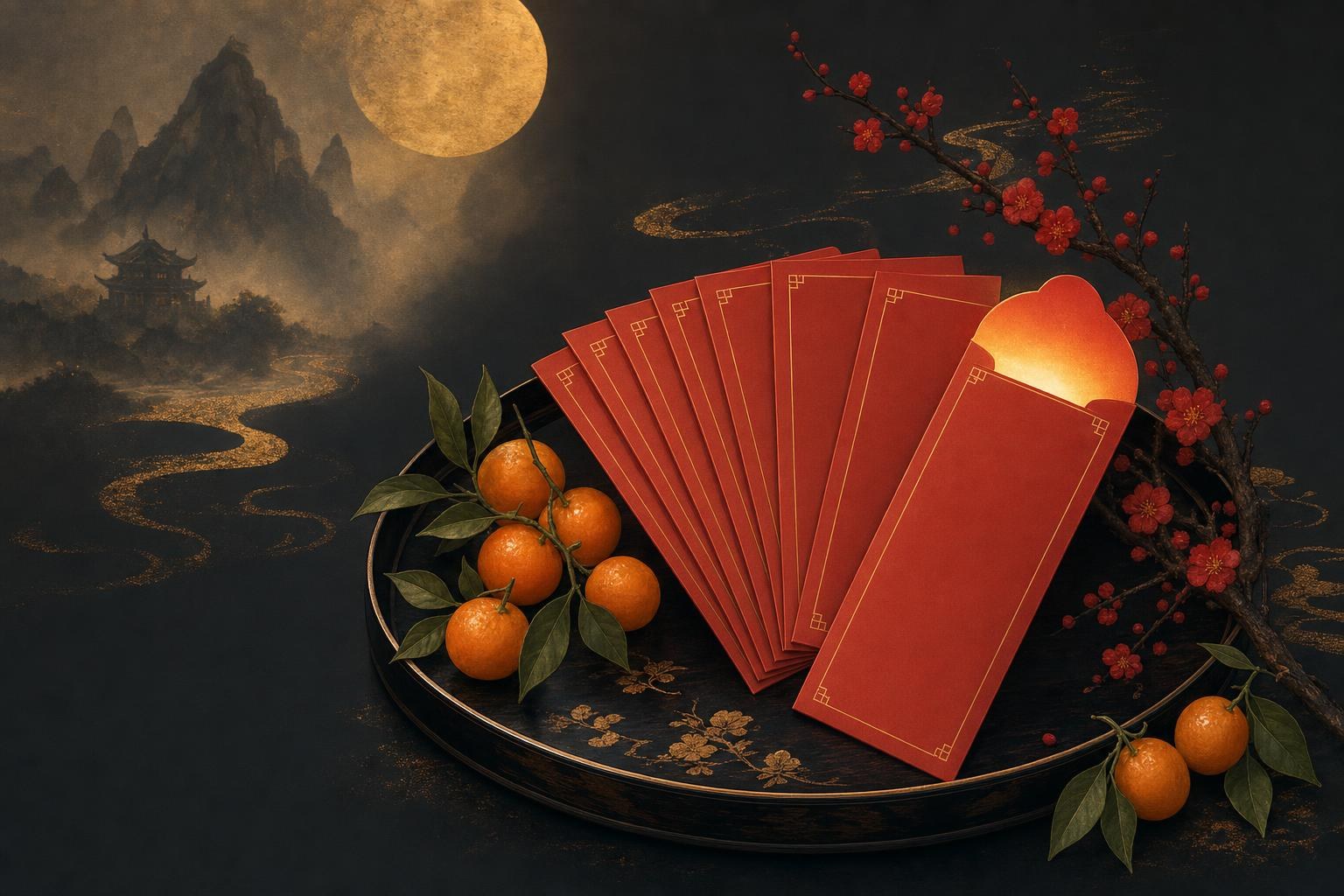
- 红包 (hóngbāo): red envelopes of lucky money, with rules worth knowing; our red envelope guide covers who gives, how much, and the numbers to avoid
- Greetings: 新年快乐 (xīnnián kuàilè, happy new year) and 恭喜发财 (gōngxǐ fācái, wishing you prosperity)
Lantern Festival 元宵节: the finale
元宵节 (Yuánxiāo Jié), the 15th day of the first lunar month, closes the New Year period under the year's first full moon: lantern displays, riddle games, and bowls of 汤圆 (tāngyuán), glutinous rice balls whose round shape means family togetherness. Lanterns deserve their own story; we tell it in the Chinese lanterns guide.
Qingming 清明节: tomb-sweeping day
清明节 (Qīngmíng Jié), in early April, is the day families tend ancestors' graves: sweeping, offerings, burnt paper money, and, because it doubles as a spring outing, kites and picnics. It's the most visible expression of how present ancestors remain in Chinese family life.
Dragon Boat Festival 端午节
端午节 (Duānwǔ Jié), 5th day of the 5th lunar month (May or June), commemorates the poet Qu Yuan, who drowned himself in protest and whose body villagers raced to protect, hence dragon boat races and 粽子 (zòngzi), sticky rice wrapped in bamboo leaves. The north-south debate over sweet vs. savory zongzi is China's fiercest food argument.
Qixi 七夕: the Chinese Valentine's Day
七夕 (Qīxī), 7th day of the 7th lunar month (August), marks the annual reunion of the Cowherd and Weaver Girl, lovers separated by the Milky Way who meet once a year on a bridge of magpies. Modern celebration looks like Valentine's Day: flowers, dinners, and aggressive mall promotions.
Mid-Autumn Festival 中秋节: mooncakes under the full moon
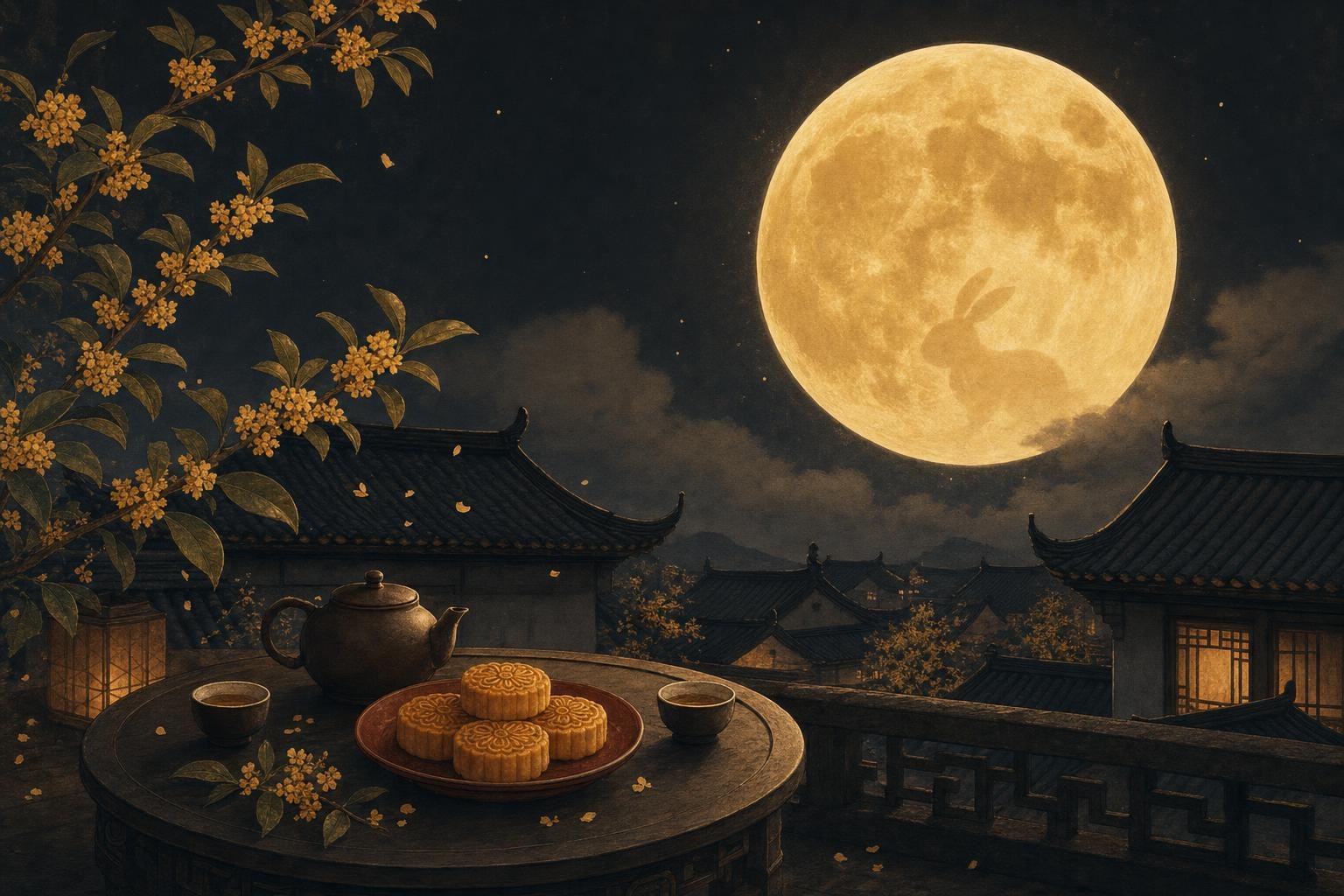
中秋节 (Zhōngqiū Jié), 15th day of the 8th lunar month (September or early October), is the second-biggest family festival: full moon, reunion dinners, and 月饼 (yuèbǐng, mooncakes) exchanged by the boxful. The legends, the mooncake flavors, and the exact upcoming dates are in our full Mid-Autumn Festival guide.
Double Ninth 重阳节
重阳节 (Chóngyáng Jié), 9th day of the 9th lunar month (October), is the festival of elders: climbing hills for luck and health, chrysanthemum wine, and honoring grandparents. Quieter than the giants above, but a lovely one to know.
The modern public holidays
- New Year's Day (元旦, Yuándàn): January 1, a one-day nod to the Western calendar
- Labor Day (劳动节): May 1, a multi-day break and travel spike
- National Day (国庆节, Guóqìng Jié): October 1, kicking off "Golden Week," seven days of holiday and the busiest tourism of the year alongside Spring Festival
A quirk to know if you ever work with Chinese colleagues: long holidays are often extended by "makeup workdays," where the Saturday before or after becomes a working day to stitch the break together. Yes, everyone grumbles about it.
Frequently asked questions
What is the most important Chinese holiday?
Spring Festival (Chinese New Year), by a wide margin: it's Christmas, Thanksgiving, and New Year's rolled into one week, and the whole country reorganizes around going home for it.
Why do Chinese holiday dates change every year?
The traditional festivals follow the lunisolar calendar, whose months track the moon. Against the Western calendar they drift within a window of a few weeks, the same way Easter does.
Which Chinese holidays are public days off?
Spring Festival, Qingming, Labor Day, Dragon Boat, Mid-Autumn, and National Day anchor the official holiday calendar, with New Year's Day added. Lantern Festival, Qixi, and Double Ninth are widely celebrated but not days off.
What should I say during a Chinese holiday?
节日快乐 (jiérì kuàilè, happy holiday) works for nearly all of them. Spring Festival gets 新年快乐 and 恭喜发财; Mid-Autumn gets 中秋快乐. Deliver any of these in decent tones and watch faces light up.
Festival words like 春节, 月饼, and 红包 are exactly the vocabulary graded stories are made of. Create a free Chenjin account to read holiday stories at your level, with every word one tap from its meaning and audio.
Keep learning
- Mid-Autumn Festival: Mooncakes, Legends, and How China Celebrates
- Chinese Lanterns: What They Mean, the Types, and the Lantern Festival
- Red Envelopes at Chinese New Year: Rules, Amounts, and Meaning
- Chinese Colors: All the Color Words, Plus What Each Color Means
- Chinese Proverbs: 50 Timeless Sayings About Life, Success, and Love