

Chinese Snacks: 30 Popular Snacks and Drinks (With Their Chinese Names)
 沉浸 TeamSeptember 3, 202611 min read
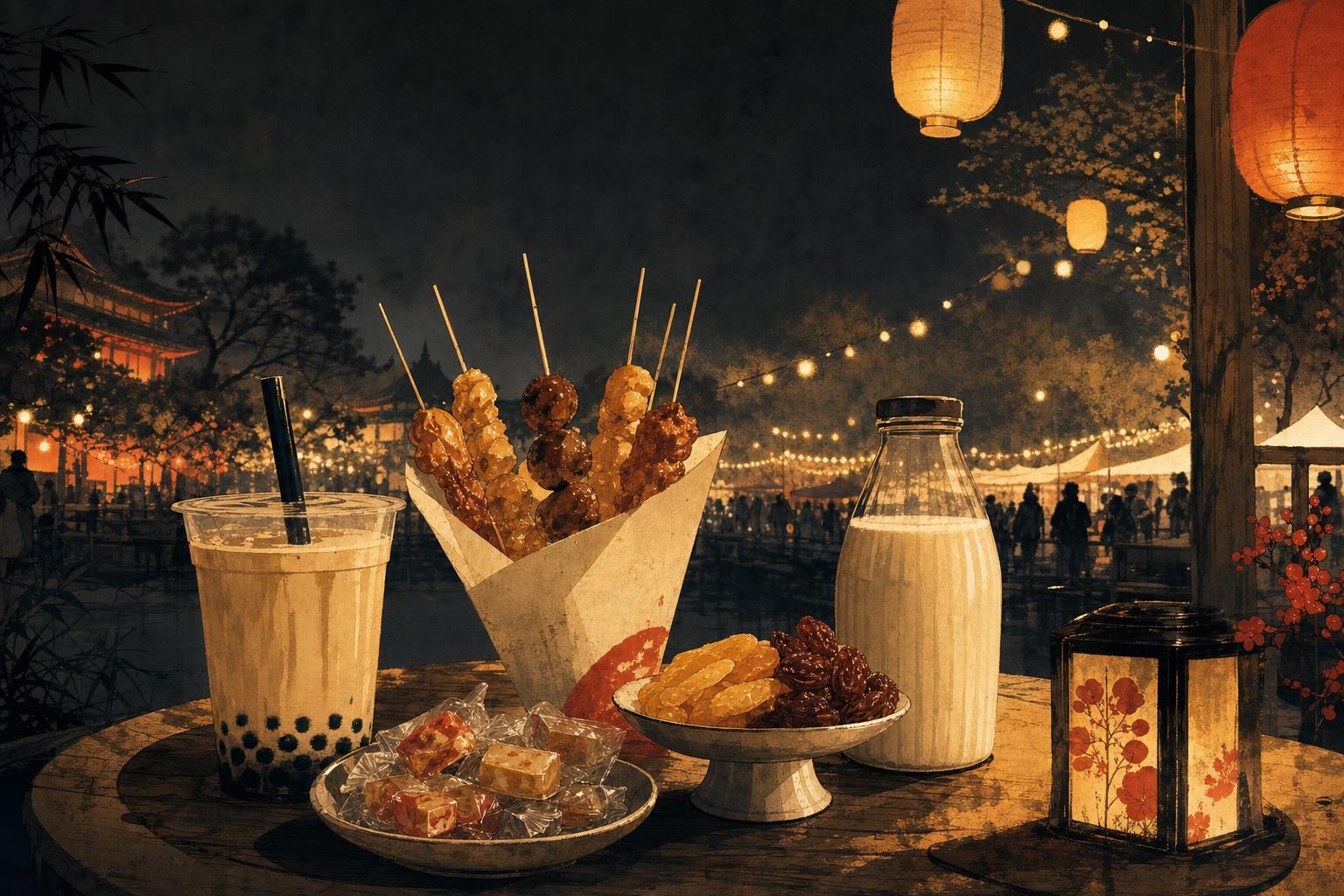
Chinese snacks are one of the most fun ways into the language, and this guide gives you 30 of the most popular snacks and drinks with their Chinese names, pinyin, and what each one tastes like. The word for "snack" is 零食 (língshí, "snack food"), and the word for the small dishes you buy on the street is 小吃 (xiǎochī, literally "small eats").
Whether you're shopping at an Asian supermarket, opening a snack box, or standing in front of a street stall in Beijing, knowing the names helps. It's also a low-pressure way to pick up Chinese culture one bite at a time. Let's start with the packaged stuff, then move to street food, drinks, and the handful of food words you need to order anything.
Popular Chinese snacks: packaged snacks and Chinese candy
These are the snacks you'll find in any Chinese corner store, and increasingly in Asian markets around the world. Most of them are cheap, so it's easy to try a bunch at once.
Sweet snacks and Chinese candy
- Haw flakes: 山楂片 (shānzhā piàn, "hawthorn slices"). Thin pink discs made from hawthorn fruit, sweet and a little tart. Many Chinese kids grew up on these, and they're often eaten with medicine to get rid of the bitter taste.
- White Rabbit milk candy: 大白兔奶糖 (Dàbáitù nǎitáng, "Big White Rabbit milk candy"). A chewy, creamy candy from Shanghai wrapped in edible rice paper. Yes, you eat the thin inner wrapper. This is probably the most famous Chinese candy of all.
- Preserved plums: 话梅 (huàméi, "preserved plum"). Salty, sour, sweet, and sometimes a bit like licorice. They're an acquired taste, but people who like them love them.
- Peach cookies: 桃酥 (táosū, "peach shortbread"). Crumbly, buttery cookies with a cracked top. Despite the name, there's no peach in them; the name comes from walnut (核桃) versions from long ago.
- Sesame twists: 麻花 (máhuā, "fried dough twist"). Crunchy braided dough, sometimes sweet and sometimes salty. Tianjin is famous for giant ones.
- Dried mango: 芒果干 (mángguǒ gān, "mango dried"). Not originally Chinese, but everywhere in Chinese snack shops now. The word 干 (gān, "dried") shows up on lots of snack labels, so it's worth remembering.
- Mooncakes: 月饼 (yuèbǐng, "moon cake"). Dense round pastries filled with lotus seed paste, red bean, or salted egg yolk. They're mostly eaten during the Mid-Autumn Festival, but you can find them packaged year-round in some shops.
Salty and savory packaged snacks
- Latiao (spicy gluten strips): 辣条 (làtiáo, "spicy strips"). Chewy strips of seasoned wheat gluten, oily and spicy-sweet. This is the number one after-school snack in China, and it has a bit of a cult following online.
- Sunflower seeds: 瓜子 (guāzǐ, "melon seeds"). Roasted seeds you crack with your teeth, one at a time, for hours. Every family gathering and every train ride comes with a pile of shells. They come in flavors like caramel, spiced, and five-spice.
- Want Want rice crackers: 旺旺雪饼 (Wàngwàng xuěbǐng, "Want Want snow cracker"). Light, puffy rice crackers with a sweet frosted glaze. 饼干 (bǐnggān) is the general word for "cracker" or "biscuit," and you'll see it on many packages.
- Shrimp chips: 虾条 (xiātiáo, "shrimp sticks"). Airy puffed sticks with a mild shrimp flavor. Think of them as China's answer to cheese puffs.
- Beef jerky: 牛肉干 (niúròugān, "dried beef"). Often sweeter and more tender than Western jerky, with versions from Inner Mongolia, Sichuan, and Yunnan. Spicy ones say 麻辣 (málà) on the bag.
- Dried tofu: 豆干 (dòugān, "dried tofu"). Small pressed squares of tofu, marinated and vacuum-packed. They're chewy, savory, and a good vegetarian option.
- Fish-skin peanuts: 鱼皮花生 (yúpí huāshēng, "fish-skin peanuts"). Peanuts inside a crunchy, slightly sweet shell. No fish involved, just an old name for the coating. 花生 (huāshēng) is the word for "peanut."
- Tea eggs: 茶叶蛋 (cháyèdàn, "tea leaf egg"). Hard-boiled eggs simmered in tea, soy sauce, and spices until the cracked shells leave a marbled pattern. You'll find them in a warm pot at almost every convenience store counter.
Chinese street snacks (小吃)
Street food is where Chinese snacking gets serious. These are the classics you'll see at night markets, outside subway stations, and near schools. Prices are low and portions are small, so the plan is to try several.
- Candied hawthorn skewers (tanghulu): 糖葫芦 (tánghúlu, "sugar gourd"). Hawthorn berries on a stick, dipped in hard sugar syrup that cracks when you bite. A winter favorite in northern China, and now made with strawberries and grapes too.
- Jianbing: 煎饼果子 (jiānbing guǒzi, "fried crepe with crisp"). A thin crepe cooked on a hot plate with egg, sauce, scallions, and a crunchy fried cracker folded inside. The classic Chinese breakfast on the go.
- Baozi (steamed buns): 包子 (bāozi, "steamed stuffed bun"). Soft, fluffy buns filled with pork, vegetables, or sweet bean paste. Sold from tall stacks of bamboo steamers early in the morning.
- Shengjian (pan-fried buns): 生煎 (shēngjiān, "raw-fried"). Shanghai's crispy-bottomed cousin of the baozi, with a juicy soup inside. Bite a small hole first so the soup doesn't burn you.
- Scallion pancake: 葱油饼 (cōngyóubǐng, "scallion oil pancake"). Flaky, layered, and fried in oil. Simple and very hard to stop eating.
- Stinky tofu: 臭豆腐 (chòudòufu, "smelly tofu"). Fermented tofu that you'll smell from a block away. The taste is much milder than the smell, especially the fried kind with chili sauce.
- Grilled skewers: 烤串 (kǎochuàn, "grilled skewers"). Lamb, chicken, vegetables, and more, grilled over charcoal with cumin and chili. This is the late-night snack of choice across the whole country.
- Duck neck: 鸭脖 (yābó, "duck neck"). Braised in a spicy, numbing sauce and eaten slowly, bone by bone. Wuhan is famous for it.
- Chicken feet: 凤爪 (fèngzhǎo, "phoenix claws"). The fancy name makes them sound elegant. They're braised or pickled, and the fun is in the chewing.
- Malatang: 麻辣烫 (málàtàng, "numbing spicy hot"). You pick vegetables, noodles, tofu, and meat from a fridge, and the shop boils them in a spicy broth. It's like a personal hot pot, priced by weight.
- Roasted sweet potato: 烤红薯 (kǎo hóngshǔ, "roasted sweet potato"). Sold from metal drum ovens in winter, wrapped in paper, and eaten with your hands. Cheap, hot, and sweet.
- Tangyuan: 汤圆 (tāngyuán, "soup ball"). Chewy glutinous rice balls with black sesame or peanut filling, served in warm sweet soup. They're the traditional food of the Lantern Festival, the last day of Chinese New Year, because the round shape stands for family togetherness.
One more that belongs on every list: 饺子 (jiǎozi, "dumplings"). They're more of a meal than a snack, but you'll see small portions sold at street stalls, and no Chinese food vocabulary is complete without them.
Chinese drinks: what people order
Chinese drinks range from bubble tea shops on every corner to old-school sodas that grandparents grew up with. Here are the ones you'll run into most.
- Bubble tea: 珍珠奶茶 (zhēnzhū nǎichá, "pearl milk tea"), or just 奶茶 (nǎichá, "milk tea"). Tea, milk, sugar, and chewy tapioca pearls. It started in Taiwan and is now a huge industry across China. If you want the traditional side of the story, see our guide to Chinese tea.
- Soy milk: 豆浆 (dòujiāng, "soy milk"). Fresh, warm, and often lightly sweetened. It's the classic breakfast drink, usually paired with a fried dough stick called 油条 (yóutiáo).
- Wang Laoji herbal tea: 王老吉 (Wáng Lǎojí). A sweet, slightly herbal drink sold in a red can. It's a type of 凉茶 (liángchá, "cooling tea") from southern China, meant to balance out spicy or fried food.
- Sour plum drink: 酸梅汤 (suānméitāng, "sour plum soup"). A dark, sweet-and-sour drink made from smoked plums, served cold in summer. It goes well with hot pot.
- Wahaha AD calcium milk: 娃哈哈 AD钙奶 (Wáhāhā AD gàinǎi). A sweet, yogurt-like milk drink in a small plastic bottle. Ask anyone in China under 40 about it and watch them get nostalgic.
- Arctic Ocean soda: 北冰洋 (Běibīngyáng, "Arctic Ocean"). An orange soda from Beijing with a polar bear on the label, first sold decades ago and brought back as a retro favorite.
- Coconut milk: 椰汁 (yēzhī, "coconut juice"). Sweet, milky coconut drink in a can or carton. The Hainan brand with the plain black-and-white label is the famous one.
- Iced black tea: 冰红茶 (bīng hóngchá, "iced red tea"). Bottled sweet lemon black tea, sold everywhere for about the price of water. Note that black tea is called "red tea" in Chinese.
- Hot water: 热水 (rèshuǐ, "hot water"). This sounds like a joke, but it isn't. Plain hot water is the default drink in China, offered at restaurants, on trains, and at home. If you're sick, someone will tell you to 多喝热水 (duō hē rèshuǐ, "drink more hot water").
For the grown-ups: 白酒 (báijiǔ, "white liquor") is a strong grain spirit poured at banquets and toasts, and 青岛啤酒 (Qīngdǎo píjiǔ, "Tsingtao beer") is the country's best-known beer, brewed in the coastal city of Qingdao.
Chinese food words to order with
You don't need full sentences to buy a snack. A few words and a pointing finger get you a long way. Here's the short list that covers most situations.
- 这个 (zhège, "this one"). Point at what you want and say it. This is the most useful word in any food stall.
- 一份 (yí fèn, "one portion"). 一份这个 (yí fèn zhège) means "one of this."
- 多少钱 (duōshao qián, "how much money?"). The answer will be a number, so it helps to know Chinese numbers 1-10.
- 打包 (dǎbāo, "to pack up / takeaway"). Say this if you want it to go, or to box up leftovers.
- 好吃 (hǎochī, "delicious," literally "good to eat"). Say it with a thumbs up and the vendor will be happy. For drinks, use 好喝 (hǎohē, "good to drink").
Then the four taste words. They show up on menus, labels, and in every conversation about food:
- 辣 (là, "spicy"). 不辣 (bú là) means "not spicy," and 微辣 (wēi là) means "mildly spicy."
- 甜 (tián, "sweet").
- 咸 (xián, "salty").
- 酸 (suān, "sour").
Two more that tie the whole article together: 糖 (táng, "sugar" or "candy") appears inside 糖葫芦, 奶糖, and 酸梅汤, and 茶 (chá, "tea") appears in 奶茶, 凉茶, and 茶叶蛋. Once you spot the characters that repeat, snack names stop looking random. For a bigger starter vocabulary, see our list of the most common Chinese words, and if you're heading to China soon, the Chinese for travel page covers the rest of a trip.
Where to find Chinese snacks abroad
You don't need a plane ticket to try most of this list. Here's where to look:
- Asian supermarkets. Chains like 99 Ranch, H Mart, and T&T carry White Rabbit, haw flakes, 瓜子, 辣条, 话梅, and most of the drinks above. Smaller local Chinese grocers often have a better snack aisle than the big chains.
- Snack boxes. Several subscription services ship a monthly box of Chinese snacks, which is a fun way to try things you'd never pick yourself.
- Bubble tea shops. Many now sell packaged snacks and canned drinks like 王老吉 by the counter.
- Chinese bakeries. This is your best bet for fresh 月饼, 桃酥, 包子, and 葱油饼.
Reading the packaging is half the fun. If a label stumps you, paste the characters into our free Chinese to pinyin converter and you'll get the pinyin and a quick meaning for each word. After a few shopping trips, words like 辣, 甜, 干, and 饼 start jumping out at you on their own.
Hear every snack name pronounced
Reading 糖葫芦 is one thing, saying it so the vendor understands you is another. A free Chenjin account lets you hear every linked word in this article pronounced by a native voice, save the ones you want as flashcards, and drill your tones with the Tone Coach until 麻辣烫 rolls off your tongue.
FAQ
What are the most popular Chinese snacks?
Among packaged snacks, the big names are 辣条 (spicy gluten strips), 瓜子 (sunflower seeds), White Rabbit milk candy, haw flakes, and 话梅 (preserved plums). On the street, 糖葫芦, 煎饼果子, 包子, 烤串, and 麻辣烫 are the ones people line up for.
What is the most popular drink in China?
Tea, in all its forms, is still the everyday drink, and plain hot water is right behind it. Among store-bought drinks, bubble tea (奶茶), bottled iced black tea, and 王老吉 herbal tea are some of the biggest sellers, with soy milk (豆浆) as the standard breakfast drink.
What is the most famous Chinese candy?
White Rabbit milk candy (大白兔奶糖) is the most famous by far. It's been made in Shanghai since the mid-1900s, and the edible rice-paper wrapper is part of the experience. Haw flakes and 话梅 are the other two classics most Chinese people remember from childhood.
Are Chinese snacks spicy?
Some are, but most aren't. Sweet snacks like haw flakes, 桃酥, and mooncakes have no heat at all. The spicy ones usually say so on the label with the character 辣 (là) or the pair 麻辣 (málà, "numbing and spicy"), so it's easy to check before you buy.
How do you say "snack" in Chinese?
The general word is 零食 (língshí), which covers chips, candy, seeds, and anything you eat between meals. For street food and small local dishes, people say 小吃 (xiǎochī), which literally means "small eats."
Keep learning
- Chinese culture: values, customs, and festivals
- Chinese tea: types, traditions, and how to order it
- Chinese New Year: traditions, food, and greetings
- The Mid-Autumn Festival and mooncakes
- Chinese holidays and festivals calendar
- The most common Chinese words
- Interesting facts about China
- Essential Chinese phrases