

Does China Celebrate Christmas? What December Looks Like in China
 沉浸 TeamAugust 24, 20265 min read
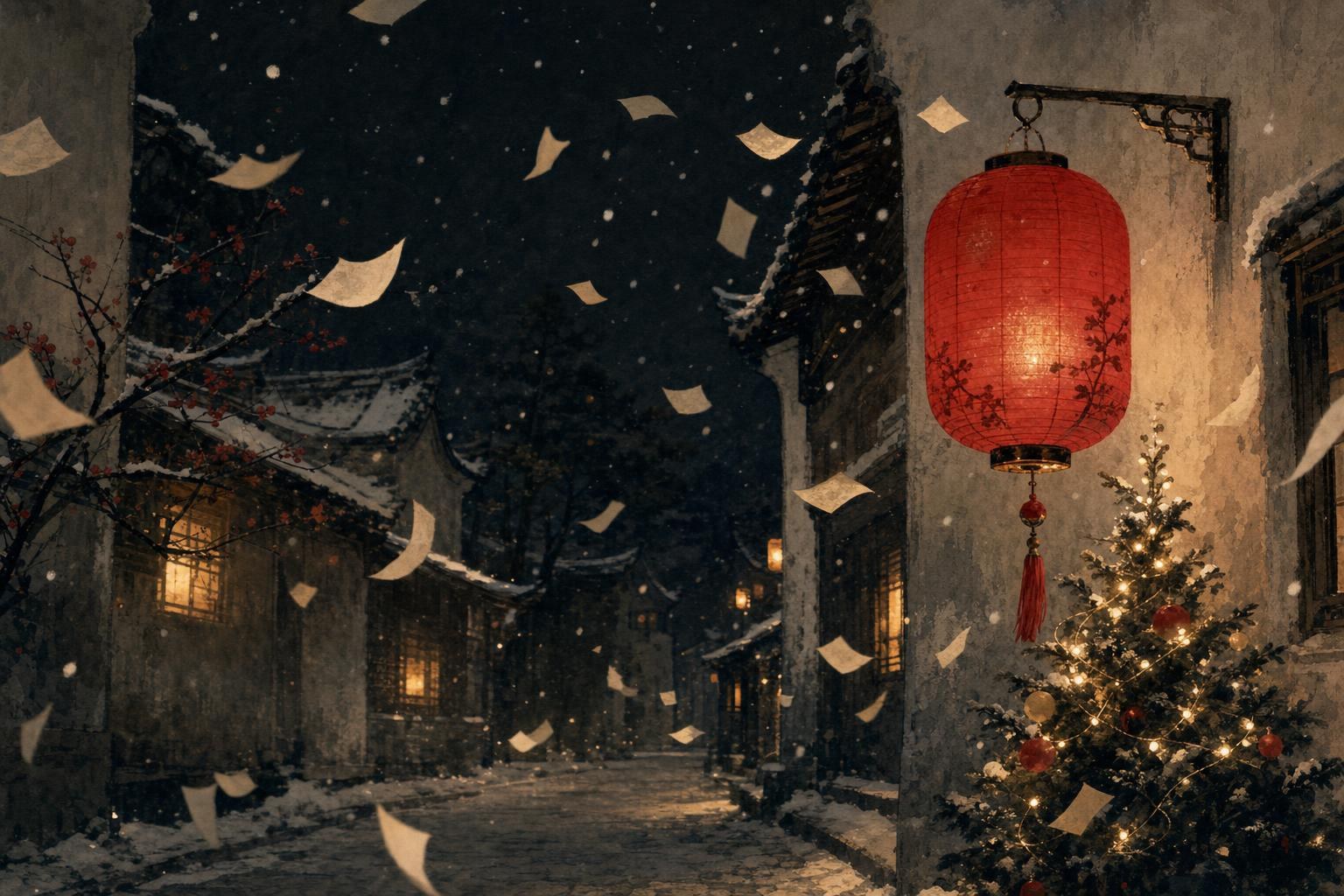
Does China celebrate Christmas? Short answer: sort of, and not the way you'd expect. Christmas isn't a public holiday in mainland China, so December 25th is a normal working day and most families don't celebrate at home. But walk through a big-city shopping district in December and you'll see lights, trees, Santa hats, and packed restaurants. In China, Christmas has become a commercial and social occasion for young people, closer to Valentine's Day than to a family holiday.
Here's what December in China looks like, plus the one tradition China invented itself: the Christmas Eve apple.
Is Christmas a holiday in China?
No. Mainland China's public holidays follow the traditional and national calendar: 春节 (Chūnjié, Spring Festival) is the big family holiday of the year, along with Mid-Autumn Festival, National Day, and a few others. Christmas isn't on the list, so schools and offices stay open on December 25th.
Two exceptions worth knowing:
- Hong Kong and Macau both observe Christmas as a public holiday, a leftover of their colonial histories, with full decorations, holidays, and family dinners.
- Christians in mainland China (estimates run in the tens of millions) do celebrate Christmas as a religious holiday, with church services on Christmas Eve and Christmas Day.
How Chinese cities celebrate Christmas
For most people who mark it at all, Christmas is a fun, imported, commercial event, and it's celebrated out in the city rather than at home:
- Shopping and promotions. Malls compete on decorations and run big Christmas sales, much like the West's holiday shopping season, minus the family logistics.
- Date night. Christmas Eve is one of the busiest restaurant and movie nights of the year for couples. Young people treat it as a romantic occasion.
- Friend gatherings and gift exchanges. Classmates and coworkers do small gift swaps, and 圣诞老人 (Shèngdàn lǎorén, Santa Claus) shows up in store displays everywhere. A running joke among expats: Chinese mall Santas are often shown playing a saxophone, and nobody is sure why.
- Lights and photos. Big trees in mall atriums become photo backdrops. The aesthetic is fully imported; the meaning is mostly "winter festival."
The apple tradition (China's own Christmas custom)
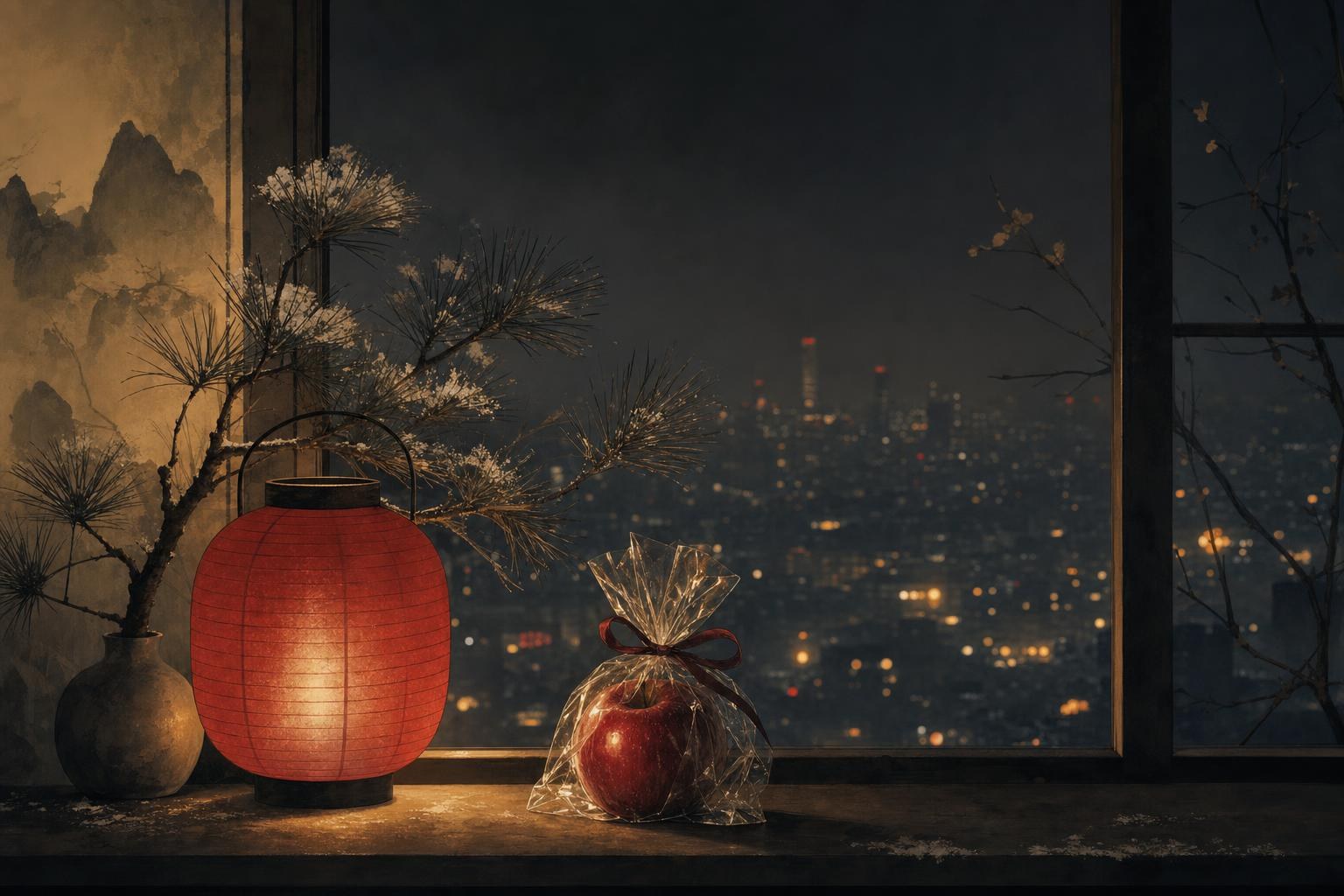
China added one custom of its own, and it's built on a pun. Christmas Eve in Chinese is 平安夜 (Píng'ān yè), "peaceful night," from the carol Silent Night. The word for apple, 苹果 (píngguǒ), starts with the same sound as 平安 (píng'ān, "safe and sound").
So on Christmas Eve, people give each other "peace apples": ordinary apples wrapped in cellophane or printed boxes, sometimes stamped with lucky words. Giving one wishes the receiver a safe, peaceful year. Fruit shops charge a premium for fancy wrapped apples every December 24th.
If you like this kind of sound-alike custom, it's the same mechanism behind lucky 8 and unlucky 4: Chinese is full of homophone traditions. Our Chinese culture guide collects the big ones.
Do people say "Merry Christmas" in Chinese?
Yes. The standard greeting is 圣诞快乐 (Shèngdàn kuàilè), "Merry Christmas," and you'll hear it freely among friends, in shops, and online in December. We have a full pronunciation guide: how to say Merry Christmas in Chinese, including the Christmas vocabulary that goes with it (tree, gift, Santa, snow).
Is Christmas banned in China?
No. You may have seen headlines about Christmas "bans": a few local governments and some university campuses have discouraged public Christmas events in certain years, usually framed as promoting traditional Chinese festivals instead. Those are local and inconsistent, not a national ban. Malls in Shanghai, Beijing, Chengdu, and most other big cities decorate enthusiastically every year, because Christmas sells.
Christmas vs Chinese New Year
A useful way to calibrate: everything Christmas is in the West, 春节 is in China. The travel crush home, the reunion dinner, the gifts (in red envelopes), the weeks of food and family, all of that belongs to Chinese New Year in late January or February. Christmas occupies the light-hearted, commercial niche. If you greet a Chinese friend once a year in their language, 新年快乐 (Xīnnián kuàilè, Happy New Year) at Spring Festival lands bigger than a December greeting.
FAQ
Do Chinese people celebrate Christmas at home?
Mostly no. There's no tradition of home decorating, Christmas dinner, or stockings. Celebration happens in public spaces: malls, restaurants, cinemas, and churches for Christians.
Do Chinese people get Christmas off work?
Not in mainland China; it's a regular working day. Hong Kong and Macau do have Christmas public holidays.
What do Chinese people eat on Christmas?
There's no traditional Christmas menu. Couples book Western restaurants, friends do hotpot or KTV, and everyone gives apples on Christmas Eve. The apple is the closest thing China has to a native Christmas food.
How do you write Christmas in Chinese?
Christmas Day is 圣诞节 (Shèngdànjié), literally "holy birth festival." Christmas Eve is 平安夜 (Píng'ān yè), "peaceful night."
Curious how these words sound? Every linked word above has a dictionary page with audio. A free Chenjin account also lets you save them as flashcards and practice the tones before you try 圣诞快乐 on a Chinese friend this December.
Keep learning
- Merry Christmas in Chinese: 圣诞快乐 and how to pronounce it
- Chinese holidays: the festivals that structure the year
- Red envelopes at Chinese New Year
- Chinese culture: values, traditions, and customs
- Mid-Autumn Festival explained
- 150 essential Chinese phrases for beginners
- Chinese New Year: traditions, dos and don'ts, and what to say
- Chinese Christmas songs in Mandarin