


Seasons in Chinese: 春夏秋冬 (Plus What Season It Is in China Right Now)
 沉浸 TeamOctober 15, 20266 min read
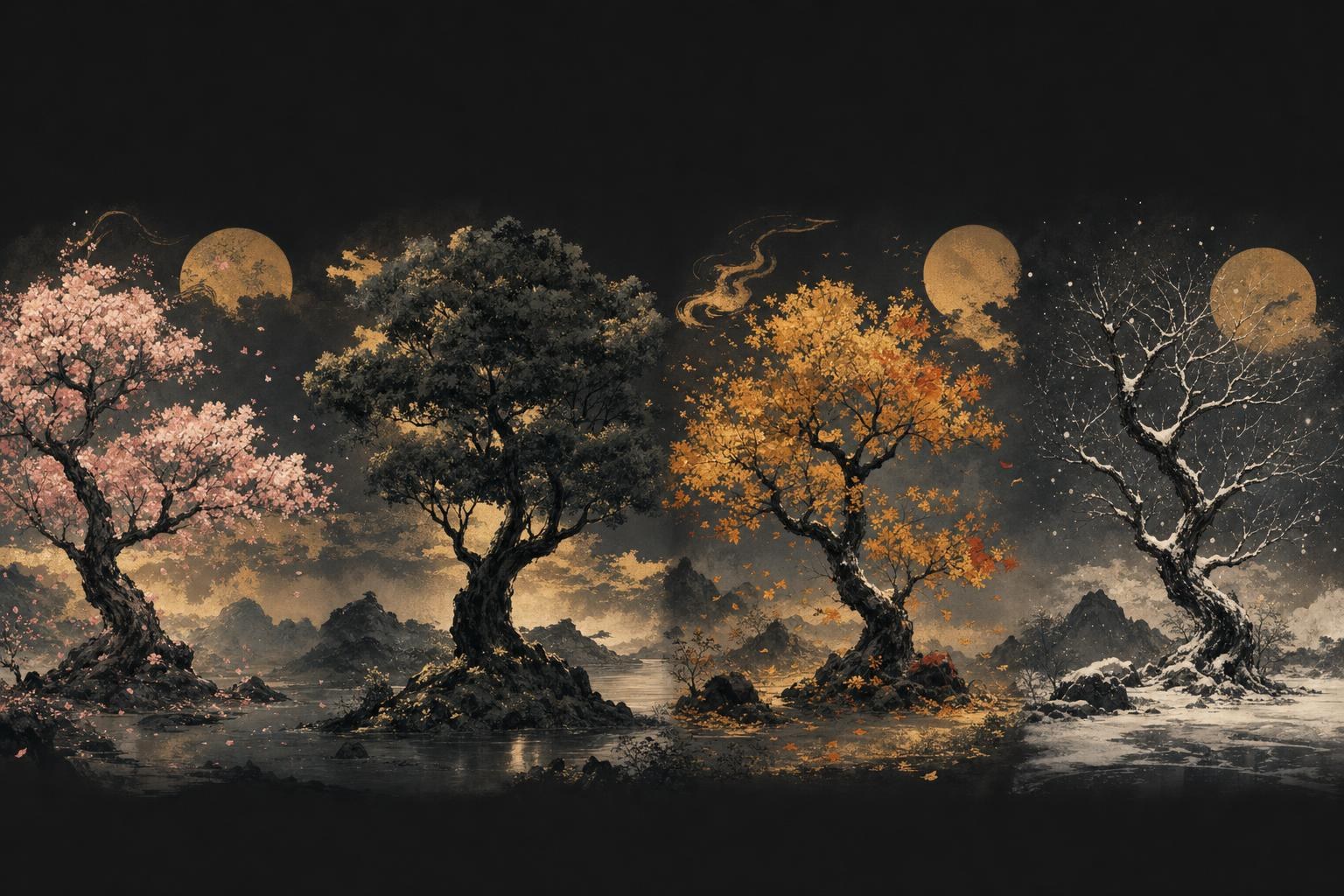
The four seasons in Chinese are 春天 (chūntiān, spring), 夏天 (xiàtiān, summer), 秋天 (qiūtiān, autumn) and 冬天 (dōngtiān, winter). Each one is the season's character plus 天 (tiān, "day, sky"). Together they're 春夏秋冬 (chūn xià qiū dōng), which is how Chinese speakers rattle off "the four seasons".
And if you landed here asking what season it is in China right now: China is in the Northern Hemisphere, so its seasons line up with the United States and Europe. October is autumn in Beijing, same as in New York. This guide covers the season and weather words, the traditional 24 solar terms, and what each season looks like across China, as part of our essential Chinese phrases guide.
The seasons in Chinese, with pinyin
- 春天 (chūntiān): spring. 春 on its own also means spring, as in 春节 (Chūnjié, Spring Festival).
- 夏天 (xiàtiān): summer.
- 秋天 (qiūtiān): autumn, fall. There's no separate word for "fall"; 秋天 covers both.
- 冬天 (dōngtiān): winter.
- 季节 (jìjié): season, the general word.
- 四季 (sìjì): the four seasons.
In writing and in set phrases you'll also see 季 (jì) instead of 天: 春季 (chūnjì), 夏季 (xiàjì), 秋季 (qiūjì), 冬季 (dōngjì). Same meaning, more formal. A store's "summer sale" is 夏季大减价, not 夏天大减价. Print all four on our free character practice sheets if you want to write them.
How to ask and say what season it is
- 现在是什么季节? (Xiànzài shì shénme jìjié?) What season is it now?
- 现在是秋天。 (Xiànzài shì qiūtiān.) It's autumn now.
- 你最喜欢哪个季节? (Nǐ zuì xǐhuan nǎge jìjié?) Which season do you like best?
- 我最喜欢春天,因为不冷也不热。 (Wǒ zuì xǐhuan chūntiān, yīnwèi bù lěng yě bú rè.) I like spring best, because it's neither cold nor hot.
- 北京的冬天很冷。 (Běijīng de dōngtiān hěn lěng.) Beijing's winter is cold.
What season is it in China right now?
The same season it is in North America and Europe. China sits entirely north of the equator, so there's no Australia-style flip. As a rule of thumb for the big eastern cities (Beijing, Shanghai, Guangzhou):
- March to May: spring (春天). Warming up, windy in the north, and the plum and cherry blossoms are out.
- June to August: summer (夏天). Hot and humid almost everywhere. Shanghai and the Yangtze region get the 梅雨 (méiyǔ, "plum rain") season in June and July, weeks of drizzle.
- September to November: autumn (秋天). Clear, dry and mild. Most people's favorite, and the season of 中秋节 (the Mid-Autumn Festival) and the October National Day Golden Week.
- December to February: winter (冬天). Dry and cold in the north, damp and chilly in the south. Chinese New Year lands here, in late January or February.
The catch is that China is the size of the United States, so "winter in China" means different things in different places:
- Harbin in the far northeast drops below -20°C and hosts a famous ice sculpture festival every January.
- Beijing has four sharp seasons: dry freezing winters, short springs, hot summers, golden autumns.
- Shanghai is humid year-round, with muggy summers and grey, chilly winters, and most older homes have no central heating.
- Guangzhou and Hong Kong are subtropical. Winter is a light jacket; summer is long, wet and typhoon-prone.
- Kunming in the southwest is nicknamed 春城 (Chūnchéng, "Spring City") because it's mild all year.
- Hainan island in the far south is tropical, and northern Chinese retirees fly there to escape winter.
Weather words to go with each season
Season words are useless without weather words. These are the ones you'll use every day:
- 天气 (tiānqì): weather. 今天天气怎么样? (Jīntiān tiānqì zěnmeyàng?) How's the weather today?
- 热 (rè): hot. 冷 (lěng): cold.
- 暖和 (nuǎnhuo): warm, pleasantly. 凉快 (liángkuai): cool, pleasantly. Both are compliments to the weather.
- 下雨 (xiàyǔ): to rain. 下雪 (xiàxuě): to snow. 刮风 (guāfēng): to be windy.
- 晴天 (qíngtiān): a sunny day. 阴天 (yīntiān): an overcast day.
- 度 (dù): degrees. 今天三十度 (jīntiān sānshí dù), "it's 30 degrees today". China uses Celsius.
Two seasonal idioms people love: 秋老虎 (qiū lǎohǔ, "autumn tiger") is a late-summer heatwave in September, and 三伏天 (sānfú tiān, "the three fu days") is the dog days of mid-July to mid-August, the hottest stretch of the year.
The 24 solar terms: China's traditional seasons
Traditional Chinese divides the year into 24 节气 (jiéqì, "solar terms") of about 15 days each, based on the sun's position. They're still printed on calendars and still shape what people eat and do. The four that start the seasons:
- 立春 (Lìchūn, "start of spring"): around February 4.
- 立夏 (Lìxià, "start of summer"): around May 5.
- 立秋 (Lìqiū, "start of autumn"): around August 7.
- 立冬 (Lìdōng, "start of winter"): around November 7.
Notice that each traditional season begins about six weeks earlier than the Western astronomical one. The solstices and equinoxes (冬至 Dōngzhì, 夏至 Xiàzhì, 春分 Chūnfēn, 秋分 Qiūfēn) sit in the middle of each Chinese season, not at its start. So when a Chinese friend says summer has started in early May, they're using this calendar, not being optimistic. 冬至, the winter solstice, is a small festival of its own: families eat dumplings in the north and 汤圆 (tāngyuán, sweet rice balls) in the south.
Seasons in Chinese culture
- Spring means Chinese New Year, which is literally 春节, the "Spring Festival", even though it falls in deep winter by the weather. Our guide to Chinese New Year explains why.
- Autumn is the season of poetry. The full moon of mid-autumn, falling leaves, and 思乡 (sīxiāng, homesickness) are classic themes, which is why the Mid-Autumn Festival is about going home.
- Winter brings 火锅 (huǒguō, hot pot) season and, in the north, long underwear sold on every corner.
- Summer is watermelon, 凉茶 (liángchá, cooling herbal tea in the south, see our Chinese tea guide), and 空调 (kōngtiáo, air conditioning) turned up high.
Want to hear 春夏秋冬 and the weather words with native audio? A free Chenjin account lets you tap any word in this post for its pronunciation, then read short stories about a Beijing winter or a Shanghai summer with pinyin on demand. Sign up free to try the reader.
FAQ
How do you say the four seasons in Chinese?
春天 (chūntiān, spring), 夏天 (xiàtiān, summer), 秋天 (qiūtiān, autumn) and 冬天 (dōngtiān, winter). As a set, 春夏秋冬 (chūn xià qiū dōng) or 四季 (sìjì).
What season is it in China right now?
The same as in the US and Europe. China is in the Northern Hemisphere: spring is March to May, summer June to August, autumn September to November, and winter December to February.
When is summer in China?
By the weather, June through August, with July and August the hottest. By the traditional solar-term calendar, summer starts at 立夏 (Lìxià) around May 5.
How do you say fall in Chinese?
秋天 (qiūtiān). Chinese doesn't distinguish "fall" from "autumn"; one word covers both.
Does it snow in China?
Yes, across the whole north: Beijing gets a few snowfalls a year and Harbin is under snow for months. The far south (Guangzhou, Hainan) almost never sees it.
Keep learning
- 150 Essential Chinese Phrases for Beginners (with Pinyin)
- Days of the Week in Mandarin: The 3 Systems and How to Use Them
- Telling Time and Giving Dates
- Chinese Colors: All the Color Words, Plus What Each Color Means
- Chinese Holidays: The Complete Calendar of Major Festivals
- Mid-Autumn Festival: Mooncakes, Legends, and How China Celebrates