

Chinese Jokes: 20 Funny Jokes in Chinese With Pinyin and Explanations
 沉浸 TeamSeptember 16, 20269 min read
Chinese jokes, called 笑话 (xiàohua), mostly run on wordplay: sound-alike puns (谐音), characters that hide inside other characters, tones that turn "dumplings" into "sleep", and the deliberately groan-worthy "cold jokes" (冷笑话) that Chinese friends trade over dinner. Below are 20 funny jokes in Chinese, each with pinyin, an English translation, and the explanation of why it's funny, because with puns the explanation is half the lesson.
Every one is a joke Chinese people tell to each other, not a joke about China. They're also some of the best vocabulary practice around, since a pun only lands if you know both words. Puns aside, this post links into our Chinese culture guide and its funnier cousins, funny Chinese proverbs and Chinese tongue twisters.
Pun jokes (谐音笑话)
1. The bun and the steamed bread
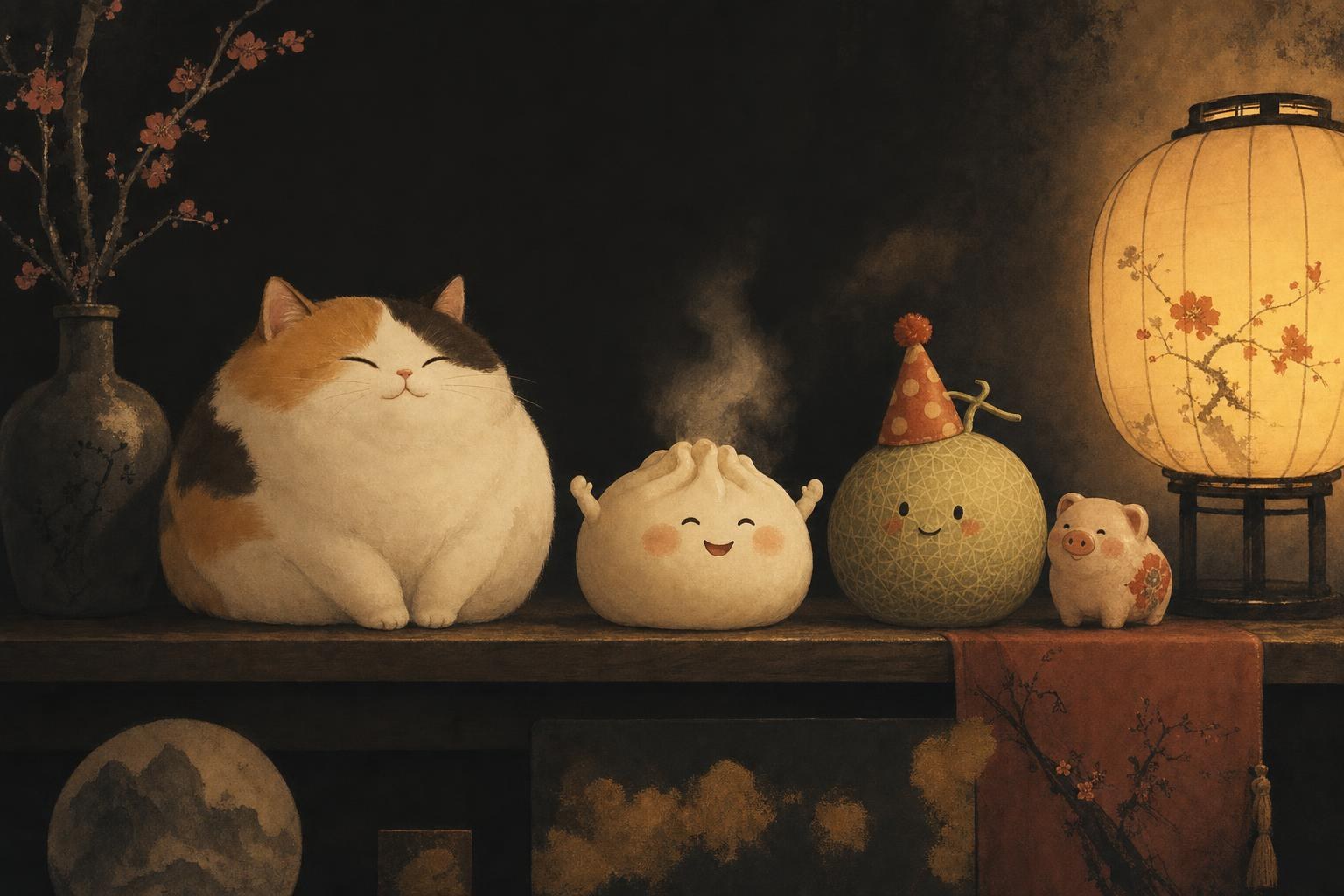
一个包子在路上走,看见一个馒头,就上去打了它一顿。馒头问:"你为什么打我?"包子说:"我打的就是你!你还有脸没馅!"
Yí ge bāozi zài lùshang zǒu, kànjiàn yí ge mántou, jiù shàngqù dǎle tā yí dùn. Mántou wèn: "Nǐ wèishénme dǎ wǒ?" Bāozi shuō: "Wǒ dǎ de jiù shì nǐ! Nǐ hái yǒu liǎn méi xiàn!"
"A stuffed bun was walking down the road, saw a plain steamed bread, and beat him up. 'Why did you hit me?' asked the bread. 'It's you I'm after! You've got the nerve to have no filling!'" The punchline plays on 没馅 (méi xiàn, "no filling") sounding like 没脸 (méi liǎn, "no shame"), so "you have the face to have no filling" doubles as "you shameless thing". A 馒头 is, of course, a bun with no filling.
2. The animal with no sense of direction
什么动物最没有方向感?麋鹿。
Shénme dòngwù zuì méiyǒu fāngxiànggǎn? Mílù.
"Which animal has the worst sense of direction? The elk." 麋鹿 (mílù, elk) sounds exactly like 迷路 (mílù, "to get lost").
3. The busiest fruit
什么水果最忙?芒果。
Shénme shuǐguǒ zuì máng? Mángguǒ.
"Which fruit is the busiest? The mango." 芒果 (mángguǒ) starts with the sound of 忙 (máng, "busy"). This is the template for hundreds of Chinese riddle-jokes: "which X is the most Y?" with a homophone answer.
4. The car with no wheels
什么车没有轮子?象棋里的车。
Shénme chē méiyǒu lúnzi? Xiàngqí lǐ de jū.
"Which car has no wheels? The chariot in Chinese chess." The character 车 means "car" when read chē, but in 象棋 (Chinese chess) the same character is a piece read jū. The joke only works in writing.
5. The egg at the teahouse
一个鸡蛋去茶馆喝茶,结果变成了茶叶蛋。
Yí ge jīdàn qù cháguǎn hē chá, jiéguǒ biànchéngle cháyèdàn.
"An egg went to a teahouse for tea and turned into a tea egg." 茶叶蛋 (tea eggs) are the eggs simmered in tea and soy sauce sold at every convenience store. This is a classic 冷笑话 (cold joke): the humor is that it's barely a joke at all.
6. The egg goes to Shandong
一个鸡蛋跑到山东去了,结果变成了卤蛋。
Yí ge jīdàn pǎodào Shāndōng qù le, jiéguǒ biànchéngle lǔdàn.
"An egg ran off to Shandong and became a braised egg." Shandong province's one-character nickname is 鲁 (Lǔ), which sounds like 卤 (lǔ), the soy-braising method. Chinese people will tell you this one and #5 back to back.
Tone jokes (the ones learners star in)
7. Dumplings or sleep
一个外国人走进餐厅说:"老板,我要睡觉。"老板说:"这里不能睡觉。"外国人说:"那水饺多少钱一碗?"
Yí ge wàiguórén zǒujìn cāntīng shuō: "Lǎobǎn, wǒ yào shuìjiào." Lǎobǎn shuō: "Zhèlǐ bù néng shuìjiào." Wàiguórén shuō: "Nà shuǐjiǎo duōshao qián yì wǎn?"
"A foreigner walks into a restaurant: 'Boss, I want to sleep.' 'You can't sleep here.' 'Then how much is a bowl of sleep?'" 水饺 (shuǐjiǎo, boiled dumplings) and 睡觉 (shuìjiào, to sleep) differ only in tones. Every Chinese teacher has told this one. See our guide to Chinese tones for why it keeps happening.
8. May I ask you (or kiss you)
学生对老师说:"老师,我可以吻你一下吗?"老师吓了一跳。学生说:"对不起,我是说,我可以问你一下吗?"
Xuésheng duì lǎoshī shuō: "Lǎoshī, wǒ kěyǐ wěn nǐ yíxià ma?" Lǎoshī xiàle yí tiào. Xuésheng shuō: "Duìbuqǐ, wǒ shì shuō, wǒ kěyǐ wèn nǐ yíxià ma?"
"A student says to the teacher, 'Teacher, may I kiss you for a moment?' The teacher jumps. 'Sorry, I mean, may I ask you something?'" 问 (wèn, ask) versus 吻 (wěn, kiss). Fourth tone, third tone, very different afternoon.
9. My eyes fell off
"我的眼睛掉了!""什么?!""哦,是眼镜。"
"Wǒ de yǎnjing diào le!" "Shénme?!" "Ò, shì yǎnjìng."
"'My eyes fell off!' 'What?!' 'Oh, I mean my glasses.'" 眼睛 (yǎnjing, eyes) and 眼镜 (yǎnjìng, glasses) differ by one tone on the second syllable, which is a neutral tone in "eyes". A joke and a grammar lesson in eleven characters.
10. Buying or selling
外国人在书店说:"我想卖一本书。"店员说:"我们这里不收书。"
Wàiguórén zài shūdiàn shuō: "Wǒ xiǎng mài yì běn shū." Diànyuán shuō: "Wǒmen zhèlǐ bù shōu shū."
"A foreigner in a bookshop: 'I'd like to sell a book.' Clerk: 'We don't buy books here.'" 买 (mǎi, buy) and 卖 (mài, sell) are one tone apart, and the characters differ by one stroke on top. This pair is where the third and fourth tones earn their keep.
Classroom jokes (造句笑话)
A huge genre of Chinese jokes is the 造句 (zàojù, "make a sentence") joke: the teacher gives a word, and a student named 小明 (Xiǎo Míng, the Chinese "Little Johnny") takes it too literally.
11. Hard to cross
老师:"用'难过'造句。"小明:"我家门前的水沟很难过。"
Lǎoshī: "Yòng 'nánguò' zàojù." Xiǎo Míng: "Wǒ jiā ménqián de shuǐgōu hěn nánguò."
"Teacher: 'Make a sentence with 难过 (sad).' Xiao Ming: 'The ditch in front of my house is very hard to cross.'" 难过 means "sad", but its two characters literally read "hard to cross".
12. Naive
老师:"用'天真'造句。"小明:"今天真热。"
Lǎoshī: "Yòng 'tiānzhēn' zàojù." Xiǎo Míng: "Jīntiān zhēn rè."
"Teacher: 'Use 天真 (naive).' Xiao Ming: 'It's so hot today.'" 天真 (naive) is hiding inside 今天真热 (jīn-tiān-zhēn-rè), just split across two words.
13. Moreover
老师:"用'况且'造句。"小明:"一列火车开过来了,况且况且况且……"
Lǎoshī: "Yòng 'kuàngqiě' zàojù." Xiǎo Míng: "Yí liè huǒchē kāi guòlai le, kuàngqiě kuàngqiě kuàngqiě..."
"Teacher: 'Use 况且 (moreover).' Xiao Ming: 'A train came along: kuang-qie, kuang-qie, kuang-qie...'" 况且 (kuàngqiě, "moreover") sounds like the clatter of a train on tracks.
14. As expected
老师:"用'果然'造句。"小明:"我先吃水果,然后吃饭。"
Lǎoshī: "Yòng 'guǒrán' zàojù." Xiǎo Míng: "Wǒ xiān chī shuǐguǒ, ránhòu chīfàn."
"Teacher: 'Use 果然 (as expected).' Xiao Ming: 'First I eat fruit, then I eat dinner.'" 果然 is pulled apart into 水果 (fruit) and 然后 (then).
15. A perfect score
小明:"妈妈,我这次考了一百分!"妈妈:"太好了!"小明:"语文二十分,数学三十分,英语五十分。"
Xiǎo Míng: "Māma, wǒ zhè cì kǎole yìbǎi fēn!" Māma: "Tài hǎo le!" Xiǎo Míng: "Yǔwén èrshí fēn, shùxué sānshí fēn, Yīngyǔ wǔshí fēn."
"'Mom, I got 100 on my exams!' 'Wonderful!' 'Twenty in Chinese, thirty in math, fifty in English.'" No pun here, just a very Chinese setup: 一百分 (100 points) is the perfect score every parent is waiting for.
Character jokes (汉字笑话)
16. Why 臭 means stinky
"臭"字怎么解释?自大一点,就臭了。
"Chòu" zì zěnme jiěshì? Zìdà yìdiǎn, jiù chòu le.
"How do you explain the character for 'stinky'? Be a little too full of yourself, and you stink." 臭 is written as 自 (self) over 大 (big) with one extra dot (一点), and 自大 means "arrogant". The joke is also a proverb. Our guide to Chinese radicals has more characters that explain themselves.
17. The character everyone gets wrong
什么字大家都念错?"错"字。
Shénme zì dàjiā dōu niàn cuò? "Cuò" zì.
"Which character does everyone read wrong? The character 错 (wrong)." Because everyone reads it as "cuò", which is "wrong".
Cold jokes (冷笑话)
A 冷笑话 is a joke so flat or absurd that the listener goes cold. The correct response is a long pause and 好冷 (hǎo lěng, "so cold"). Chinese friends compete to tell the coldest one.
18. The ant and the elephant
一只蚂蚁在路上走,看见一头大象走过来。蚂蚁伸出一条腿说:"绊死你!"
Yì zhī mǎyǐ zài lùshang zǒu, kànjiàn yì tóu dàxiàng zǒu guòlai. Mǎyǐ shēnchū yì tiáo tuǐ shuō: "Bàn sǐ nǐ!"
"An ant is walking along and sees an elephant coming. The ant sticks out a leg: 'Trip and die!'" Pure absurdity. Note the measure words: 只 for the 蚂蚁, 头 for the 大象. See Chinese measure words.
19. The dirtier it gets
什么东西越洗越脏?水。
Shénme dōngxi yuè xǐ yuè zāng? Shuǐ.
"What gets dirtier the more you wash? Water." A riddle-joke built on the 越...越 ("the more... the more") pattern from our grammar patterns list.
20. The story that never ends
从前有座山,山里有座庙,庙里有个老和尚在讲故事。讲的什么故事呢?从前有座山,山里有座庙……
Cóngqián yǒu zuò shān, shān lǐ yǒu zuò miào, miào lǐ yǒu ge lǎo héshang zài jiǎng gùshi. Jiǎng de shénme gùshi ne? Cóngqián yǒu zuò shān, shān lǐ yǒu zuò miào...
"Once there was a mountain. On the mountain was a temple. In the temple an old monk was telling a story. What story? Once there was a mountain. On the mountain was a temple..." Every Chinese child has been put to sleep (or driven crazy) by this. It's the perfect last joke because it never ends.
How Chinese humor works
- Homophones are everywhere. Mandarin has a small set of syllables and four tones, so almost every word has sound-alikes. That's why puns dominate Chinese comedy, and why the same trick powers number slang like 520.
- Characters carry jokes too. Splitting a character into its parts (臭 = 自 + 大 + 一点) is a genre of its own.
- Cold jokes are a sport. Telling a deliberately bad joke and enjoying the groan is normal, and 好冷 is the right reply.
- Xiao Ming is always there. 小明 is the generic kid in a million jokes, riddles and exam questions.
- Two-part sayings are built-in jokes. 歇后语 (xiēhòuyǔ) are proverbs with a punchline; see the bonus round in our funny proverbs post.
The best way to get a Chinese joke is to hear it: the tone jokes above only land out loud. Every linked word has a dictionary page with native audio, and a free Chenjin account lets you save the pun words (迷路, 芒果, 睡觉) as flashcards and practice the tones that make them funny. Sign up free, or try the 笑话 page to hear the word itself.
FAQ
What is a Chinese joke called?
笑话 (xiàohua), literally "laugh talk". A deliberately lame joke is a 冷笑话 (lěng xiàohua, "cold joke"), and a pun is a 谐音梗 (xiéyīn gěng).
What is the most famous Chinese joke?
Among learners, the 水饺 / 睡觉 (dumplings / sleep) tone joke. Among Chinese kids, the endless "once there was a mountain" story. Among adults, some version of the 包子 beating up the 馒头 for having no filling.
Why do Chinese jokes use so many puns?
Mandarin has only about 400 syllables (times four tones), so thousands of words share a sound. Homophones are the natural raw material for humor, the same way they power lucky numbers and internet slang.
Are Chinese jokes hard to understand for learners?
Pun jokes need you to know both words, so they get easier as your vocabulary grows. Cold jokes and Xiao Ming jokes are often understandable at HSK 2 or 3, which makes them good reading practice.
How do you say "that's funny" in Chinese?
好笑 (hǎoxiào, "funny") or 太好笑了 (tài hǎoxiào le, "that's hilarious"). For a cold joke, say 好冷 (hǎo lěng, "so cold") instead.