Chinese Lanterns: What They Mean, the Types, and the Lantern Festival
 沉浸 TeamAugust 16, 20264 min read
The Chinese lantern is one of the most recognizable objects on earth: a red silk globe with gold tassels, glowing outside a doorway. But 灯笼 (dēnglong, lantern) covers a whole family of objects, from imperial palace lanterns to the sky lanterns that float away on a flame, and behind them sits an entire festival. Here's what Chinese lanterns mean, the main types, and where the Lantern Festival fits.
What red lanterns mean
A lit lantern is a working symbol, not just decoration:
- Festivity and luck. Red is the color of joy and good fortune in China (the full story is in our Chinese colors guide), so a red lantern broadcasts celebration: New Year, weddings, openings, reunions.
- Life and belonging. A lantern at the door traditionally marked a household as prosperous and whole; rows of them mark a street as alive. The idiom 张灯结彩 (zhāngdēng-jiécǎi, "hang lanterns and tie silks") means decking a place out for celebration.
- Guidance and reunion. Lantern light guides wandering spirits home in some festivals, and guides family home in all of them. Light in the dark, someone waiting: that's the emotional core.
The main types of Chinese lantern
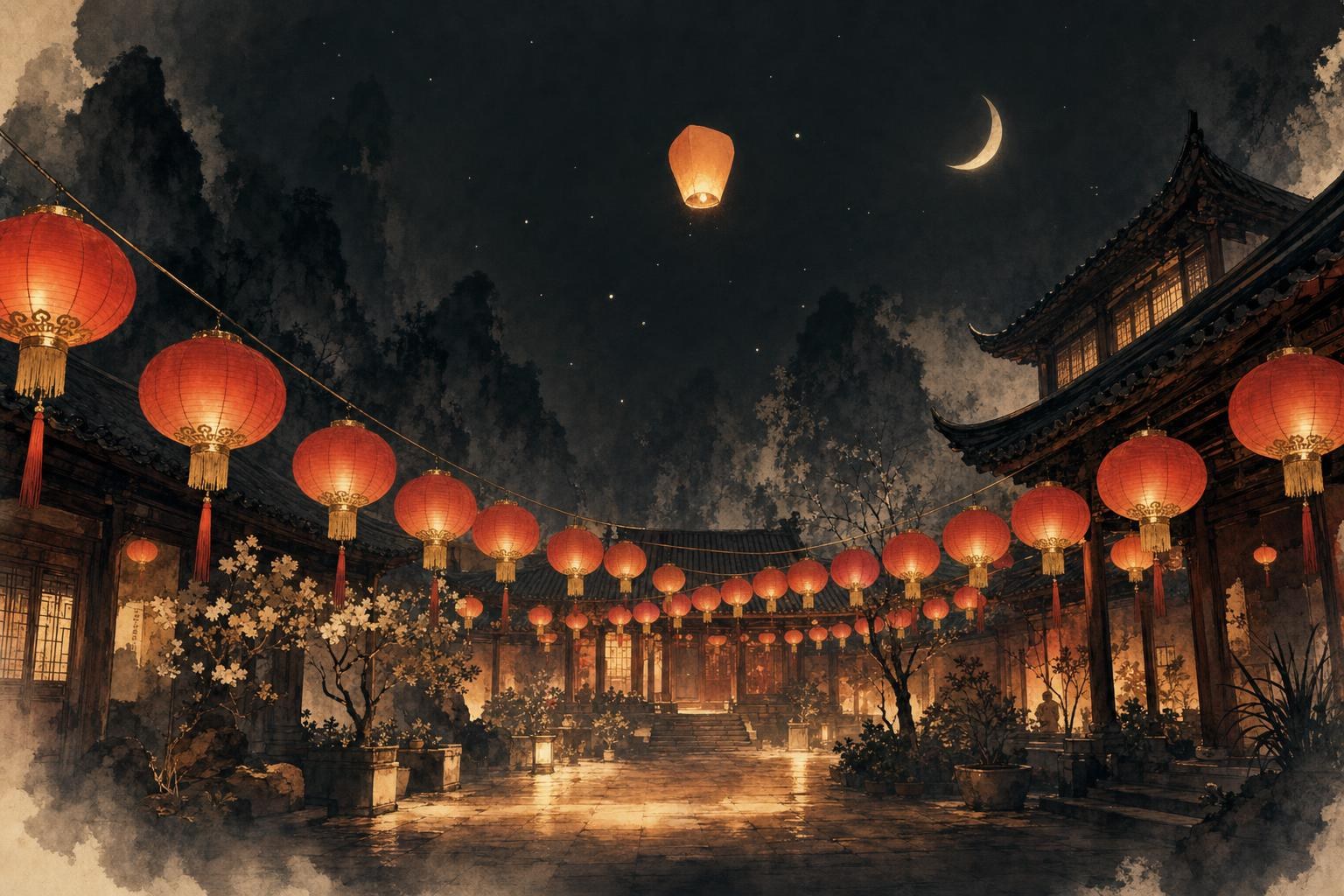
- Red hanging lanterns (灯笼, dēnglong): the classic silk-over-bamboo (now nylon-over-wire) globes hung in pairs at doors and in rows along eaves and streets. Pairs matter; single lanterns look unfinished to a Chinese eye.
- Palace lanterns (宫灯, gōngdēng): the aristocrats: hexagonal wooden frames, painted glass or silk panels, dangling jade and tassels. Museum pieces and fancy restaurant fixtures today.
- Sky lanterns (孔明灯, kǒngmíngdēng): small paper hot-air balloons released at night, named for the strategist Zhuge Liang (Kongming), who by legend used them for military signals. Wishes are written on the paper before release. Honest note: they're a real fire hazard and are banned in many Chinese cities and many countries; check before you light one.
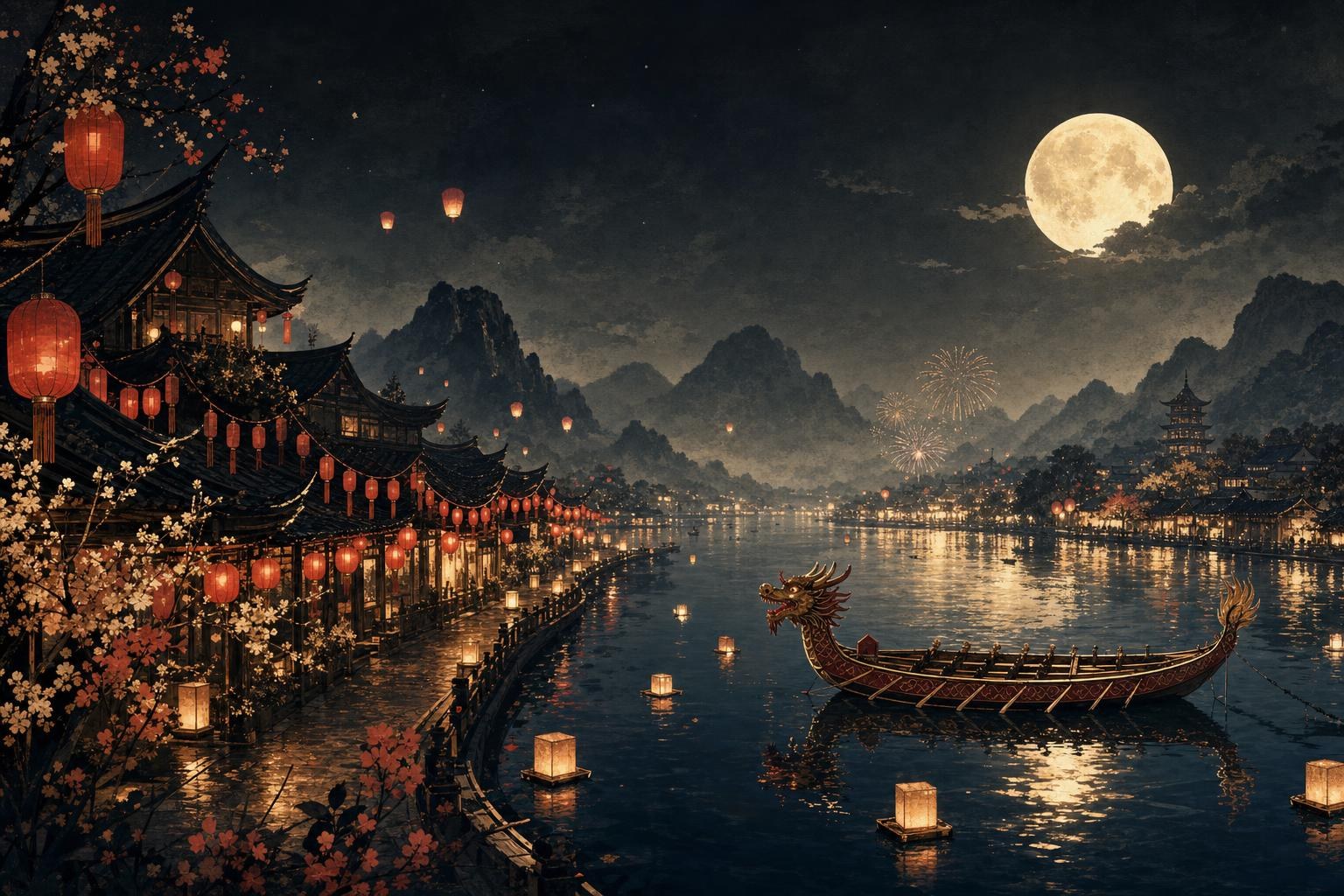
- Water lanterns (河灯, hédēng): lotus-shaped floating lights set on rivers to carry blessings (or guide spirits) downstream.
- Festival art lanterns: the giant dragons, pandas, and story scenes of modern lantern shows, descended from palace craft and now built at stadium scale; the Zigong lantern festival in Sichuan is the famous one.
The Lantern Festival 元宵节
The lantern's own holiday is 元宵节 (Yuánxiāo Jié), the 15th day of the first lunar month (February or early March), the first full moon of the new year and the finale of the Chinese New Year period. Three traditions define it:
- Lantern displays (赏灯, shǎngdēng): parks and old towns fill with glowing installations, and children carry small lanterns; in many cities this is the single most photogenic night of the year
- Lantern riddles (猜灯谜, cāi dēngmí): riddles written on slips hung from lanterns; solve one, claim a small prize; a thousand-year-old pub quiz
- 汤圆 (tāngyuán): glutinous rice balls with sweet fillings, served in warm broth; round like the moon, round like the family circle, and the festival's edible pun on 团圆 (tuányuán, reunion)
Lanterns also light the Mid-Autumn Festival in southern China, where children parade with them under the full moon; that holiday has its own guide in our Mid-Autumn Festival post.
Lanterns in language
The lantern glows through the vocabulary too. 灯 (dēng) alone means lamp or light: 红绿灯 (traffic light, "red-green light"), 台灯 (desk lamp), 灯火 (lights of a town). And the affectionate insult 灯泡 (dēngpào, "light bulb") describes the third wheel tagging along on a date, "brightening" a scene that wanted to be dark. A culture that names its third wheels after lamps takes light seriously.
Frequently asked questions
What does a Chinese lantern symbolize?
Celebration, good fortune, and reunion: red for joy, light for guidance home, roundness for completeness. Hung in pairs at a door, lanterns announce a thriving household; released into the sky, they carry wishes.
When is the Chinese Lantern Festival?
The 15th day of the first lunar month, two weeks after Chinese New Year's Day, in February or early March. It closes the New Year season under the year's first full moon.
Is "Chinese lantern" also a plant?
Yes: Physalis alkekengi, the winter cherry, is nicknamed the Chinese lantern plant for its papery orange seed pods shaped exactly like tiny 灯笼. If you came here for gardening advice, that's the search term you want.
Can I hang a Chinese lantern at home?
Absolutely, and around Chinese New Year it's a lovely gesture. Hang red ones, hang them in pairs, and take faded ones down; a tattered lantern reads as neglect of the very prosperity it's meant to signal.
Fun fact: our own reading games run on lantern light. In The Night Peddler, you walk a lantern-lit mountain road selling goods by reading real Chinese. Create a free account to play, and to read festival stories where 灯笼 glow on every page.
Keep learning
- Chinese Holidays: The Complete Calendar of Major Festivals
- Mid-Autumn Festival: Mooncakes, Legends, and How China Celebrates
- Red Envelopes at Chinese New Year: Rules, Amounts, and Meaning
- Chinese Colors: All the Color Words, Plus What Each Color Means
- Chinese Proverbs: 50 Timeless Sayings About Life, Success, and Love