Mid-Autumn Festival: Mooncakes, Legends, and How China Celebrates
 沉浸 TeamAugust 16, 20264 min read
The Mid-Autumn Festival (中秋节, Zhōngqiū Jié) is China's harvest-moon holiday: the 15th night of the 8th lunar month, when the moon is at its roundest and families gather to share mooncakes under it. In 2026 it falls on September 25. It's the second-biggest family holiday after Chinese New Year, and everything about it, from the food to the legends, orbits one idea: 团圆 (tuányuán), reunion.
When is the Mid-Autumn Festival?
The date is fixed on the lunar calendar (8th month, 15th day) and drifts on the Western one, always landing in September or early October:
- 2026: September 25
- 2027: September 15
It's a public holiday in China, usually bridged into a short break, and celebrated across East and Southeast Asia (Vietnam's Tết Trung Thu and Korea's Chuseok fall on the same full moon).
Why the full moon matters
In Chinese culture the full moon's perfect circle stands for completeness and family unity. The Mid-Autumn moon, traditionally the year's brightest, became the symbol of everyone you miss: a thousand-year-old poem by Su Shi, recited every festival, wishes 但愿人长久,千里共婵娟, "may we live long, and share this moon though a thousand miles apart." That's the festival's whole emotional register: if you can't be home, at least you're under the same moon.
Mooncakes 月饼: the festival's edible heart
月饼 (yuèbǐng) are dense round pastries stamped with decorative molds, round like the moon and shared in slices. The classics:
- Lotus seed paste (莲蓉): the gold standard, often with a salted duck egg yolk inside as the "moon"
- Red bean paste (豆沙): sweet, smooth, everywhere
- Five kernel (五仁): mixed nuts and seeds, and the beloved punching bag of the internet; every year China jokes about who keeps buying them
- Snow skin (冰皮): a modern no-bake style with a chewy rice-flour shell, served cold
Honest note for first-timers: mooncakes are rich, heavy, and divisive. The point is the giving; boxes of mooncakes flow between families, friends, and companies in the weeks before the festival, the way holiday cards once did in the West. One 月饼 with tea, shared in slices, is the authentic dose.
The legend of Chang'e 嫦娥
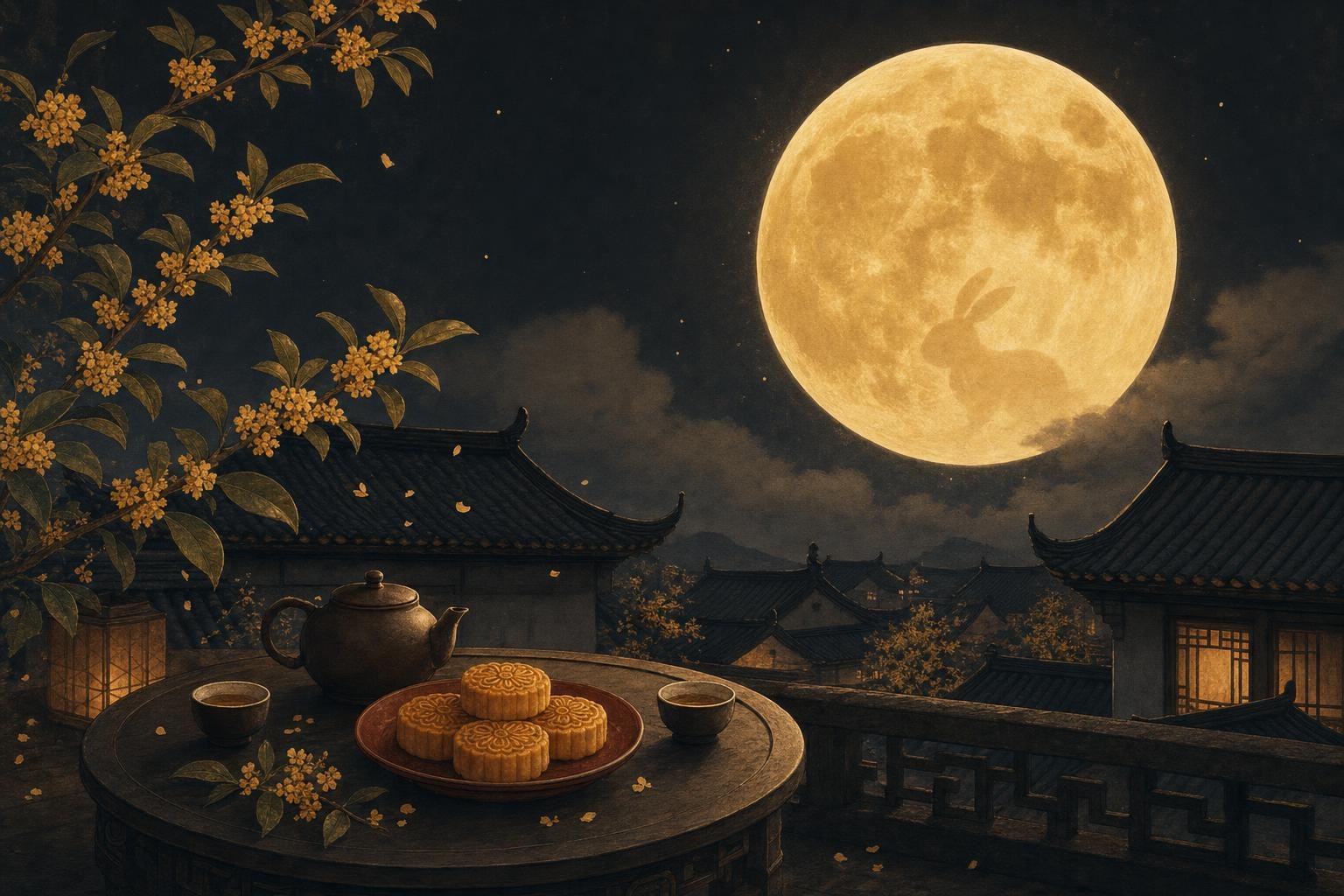
Every festival needs a story, and Mid-Autumn's is the moon goddess. The archer Hou Yi shot down nine of ten scorching suns and was rewarded with an elixir of immortality. His wife 嫦娥 (Cháng'é) drank it (to keep it from a thief, in the kind telling) and floated to the moon, where she lives forever with the 玉兔 (yùtù), the Jade Rabbit who pounds the elixir of life. Offering mooncakes to the moon is, in origin, an offering to her. When China launched lunar probes, it named them Chang'e; the rover is Yutu. The myth literally drives the space program's branding.
How the festival is celebrated
- The reunion dinner: like a smaller Chinese New Year's Eve, family gathers for a big meal, ideally with everyone home
- Moon-gazing (赏月, shǎngyuè): after dinner, outside with tea, fruit, and mooncakes while the moon rises
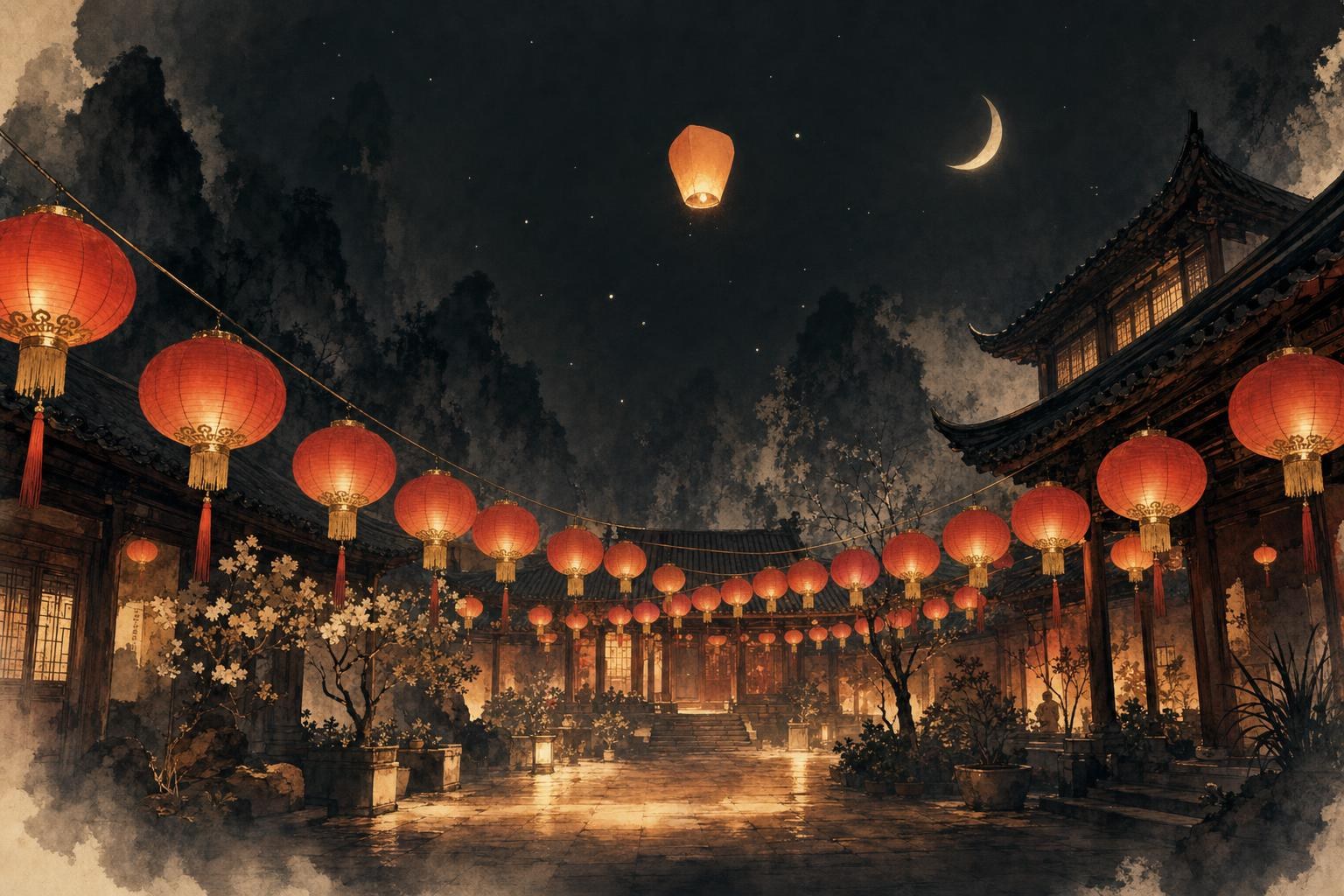
- Lanterns: especially in the south, children carry lit lanterns and parks fill with glowing displays; the full story is in our Chinese lanterns guide
- Pomelos and osmanthus: the season's fruit and fragrance; osmanthus wine is the traditional festival drink
- Gifting: mooncake boxes to relatives, bosses, teachers, and clients, escalating yearly in packaging ambition
What to say
- 中秋快乐 (Zhōngqiū kuàilè): Happy Mid-Autumn Festival, the all-purpose greeting
- 人月两团圆 (rén yuè liǎng tuányuán): "people and moon both reunited," the warm wish for family gatherings
- 花好月圆 (huā hǎo yuè yuán): "blooming flowers, full moon," a blessing for happiness, popular at weddings too
Frequently asked questions
What is the Mid-Autumn Festival celebrating?
At root, the harvest and the year's fullest moon; in practice, family. It's a reunion holiday whose symbols (round moon, round mooncakes, round tables) all point at completeness.
Is Mid-Autumn Festival the same as the Moon Festival?
Yes. English speakers call 中秋节 the Moon Festival, the Mooncake Festival, or the Harvest Moon Festival; they're all the same 15th-of-the-8th-month holiday.
How is it different from Chinese New Year?
Both are reunion festivals, but New Year is a week-long calendar reset with fireworks and red envelopes, while Mid-Autumn is a single mellow evening: dinner, moon, mooncakes. Think Thanksgiving rather than Christmas.
Why is the moon "roundest" on this night?
Lunar months start on the new moon, so the 15th day sits at the full moon. The 8th month's full moon falls near the autumn equinox, when it rises early and hangs low and golden, the famous harvest moon.
Festival stories are some of the best graded reading there is: concrete scenes, repeating vocabulary, real culture. Create a free Chenjin account and read about 嫦娥 and 月饼 at your level, with every word one tap from audio and meaning.
Keep learning
- Chinese Holidays: The Complete Calendar of Major Festivals
- Chinese Lanterns: What They Mean, the Types, and the Lantern Festival
- Red Envelopes at Chinese New Year: Rules, Amounts, and Meaning
- Chinese Proverbs: 50 Timeless Sayings About Life, Success, and Love
- Chinese Colors: All the Color Words, Plus What Each Color Means