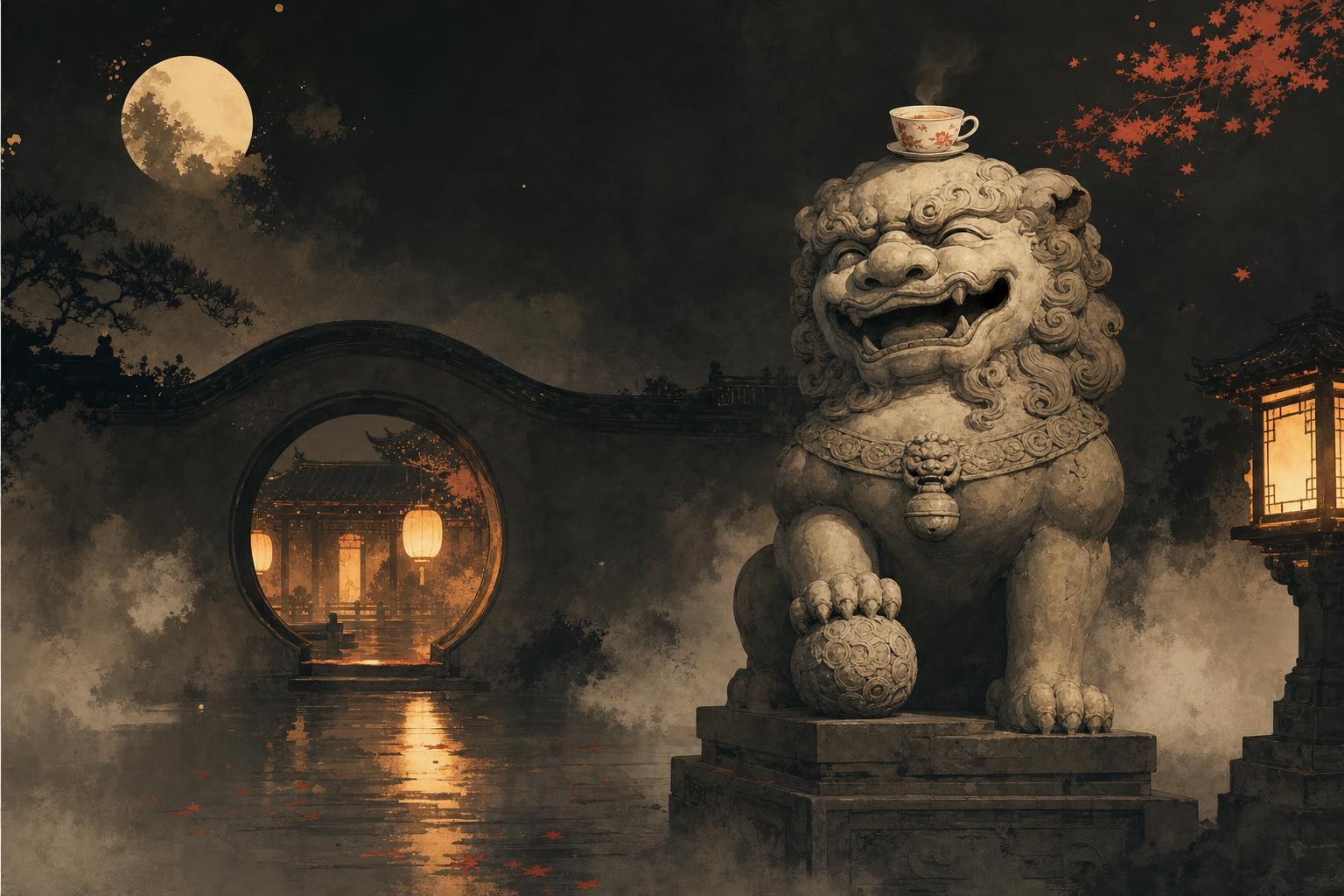



Chengyu: How Chinese Four-Character Idioms Work (with 30 Examples)
 沉浸 TeamJune 29, 20266 min read
A chengyu (成语, chéngyǔ) is a Chinese set phrase, almost always exactly four characters, that carries a complete idea: 井底之蛙 "a frog at the bottom of a well" (someone with a narrow worldview), 亡羊补牢 "mend the pen after losing a sheep" (it's not too late to fix things). The word 成语 literally means "formed speech": phrases that set long ago and haven't changed since.
Chinese has tens of thousands of them, and speakers treat a well-placed chengyu the way English treats a perfect one-liner. This guide covers what chengyu are, why they're four characters, where they come from, how they fit into sentences, and 30 worth learning first.
What makes a chengyu a chengyu?
- Fixed form. You can't swap a character or reorder them. 马马虎虎 is an idiom; 虎虎马马 is a typo.
- Four characters, almost always. A small minority run longer, but the four-character form is so standard that "four-character idiom" and "chengyu" are near-synonyms.
- Classical roots. Most come from ancient texts: philosophy, histories, poetry, fables. Their internal grammar is classical Chinese, which is why the characters often don't add up word-by-word in modern Mandarin.
- Used as a single word. A chengyu slots into a sentence as an adjective, adverb, verb phrase, or comment, the way "state of the art" slots into English.
That's the difference from a proverb (谚语): proverbs are full stand-alone sentences in plain language. Compare 熟能生巧 in our Chinese proverbs guide with the chengyu below: proverbs give advice, chengyu name things.
Why four characters?
Three forces pushed chengyu into the four-beat mold:
- Classical Chinese was compact. Old written Chinese used mostly one-character words, so four characters could hold a whole scene: subject, action, image, verdict.
- Rhythm. Four beats split into two pairs (2+2), which is the natural cadence of Chinese poetry and rhetoric. Say 山清水秀 (shān qīng shuǐ xiù, "mountains clear, waters lovely") out loud and you can feel it.
- Quotability. Most chengyu are quotations, compressed. A famous story gets boiled down to its four most essential characters, and that abbreviation becomes the word for the whole idea.
Where chengyu come from: three stories
The best way to understand chengyu is to watch one get made. Three classics:
自相矛盾: the spear and the shield
A weapons seller bragged that his spear (矛) could pierce anything, and his shield (盾) could block anything. A bystander asked: "So what happens if your spear hits your shield?" The seller had no answer. 自相矛盾 (zìxiāngmáodùn), "own spear, own shield," now means to contradict yourself. The story runs so deep that 矛盾 (máodùn) became the everyday Chinese word for "contradiction."
刻舟求剑: notching the boat
A man's sword slipped overboard mid-river. Calmly, he carved a notch in the boat's railing where it fell, planning to dive for the sword once ashore, right under the notch. 刻舟求剑 (kèzhōuqiújiàn), "carving the boat to seek the sword," describes rigid thinking that ignores changed circumstances.
画龙点睛: dotting the dragon's eyes
A master painter painted four dragons on a temple wall but left their eyes blank, warning that the dragons would fly away if he finished them. Challenged to prove it, he dotted the eyes of two, and they burst off the wall into the sky. 画龙点睛 (huàlóngdiǎnjīng), "painting the dragon, dotting the eyes," means the final touch that brings the whole work to life.
How chengyu fit into sentences
Grammatically, treat a chengyu as one word and place it where that word would go:
- As a predicate or description: 他的说法自相矛盾。"His claims contradict each other."
- Before a verb, with 地: 她聚精会神地听课。"She listened with full concentration."
- After 得, as a result: 房间乱得乱七八糟。More often just 房间乱七八糟, "the room's a disaster."
- As a stand-alone comment: 你这是刻舟求剑。"You're notching the boat."
If sentence positions like 地 and 得 are new, our Chinese grammar overview and grammar patterns guide walk through them.
30 chengyu worth learning first
Every entry links to its dictionary page with audio, tone-marked pinyin, and a character breakdown.
The everyday ten
- 马马虎虎 (mǎmǎhūhū): so-so, careless.
- 乱七八糟 (luànqībāzāo): a complete mess.
- 不可思议 (bùkěsīyì): unbelievable, inconceivable.
- 莫名其妙 (mòmíngqímiào): baffling; for no reason at all.
- 迫不及待 (pòbùjídài): can't wait, bursting to.
- 一模一样 (yīmúyīyàng): exactly identical.
- 人山人海 (rénshānrénhǎi): a massive crowd.
- 七上八下 (qīshàngbāxià): stomach in knots.
- 自由自在 (zìyóuzìzài): carefree and unconstrained.
- 无能为力 (wúnéngwéilì): powerless to help.
Ten for opinions and effort
- 全力以赴 (quánlìyǐfù): to go all out.
- 半途而废 (bàntú'érfèi): to quit halfway.
- 三心二意 (sānxīn'èryì): half-hearted, wavering.
- 与众不同 (yǔzhòngbùtóng): out of the ordinary.
- 理所当然 (lǐsuǒdāngrán): taken for granted.
- 实事求是 (shíshìqiúshì): fact-based, pragmatic.
- 千方百计 (qiānfāngbǎijì): by every possible means.
- 一举两得 (yījǔliǎngdé): one move, two gains.
- 念念不忘 (niànniànbùwàng): unable to stop thinking about.
- 爱不释手 (àibùshìshǒu): to love something too much to put it down.
Ten with stories inside
- 画蛇添足 (huàshétiānzú): ruining it by overdoing it.
- 守株待兔 (shǒuzhūdàitù): waiting for luck to strike twice.
- 亡羊补牢 (wángyángbǔláo): better late repairs than none.
- 掩耳盗铃 (yǎn'ěrdàolíng): fooling only yourself.
- 拔苗助长 (bámiáozhùzhǎng): impatience that ruins growth.
- 井底之蛙 (jǐngdǐzhīwā): a narrow worldview.
- 狐假虎威 (hújiǎhǔwēi): borrowed power, used to bully.
- 愚公移山 (yúgōngyíshān): "the foolish old man moves the mountain," impossible persistence that pays.
- 滥竽充数 (lànyúchōngshù): faking it in the ensemble; a fraud padding out the numbers.
- 东施效颦 (dōngshīxiàopín): clumsy imitation that makes things worse.
How many chengyu do you need?
Honest numbers: big dictionaries list 30,000+, educated native speakers actively use perhaps a thousand, and a few hundred cover the vast majority of what you'll meet in books, shows, and conversation. For learners, chengyu start appearing on the HSK lists around HSK 5 and get heavy at HSK 7-9. Thirty well-chosen ones, like the list above, already make your Chinese sound noticeably more native.
How to learn chengyu (without brute force)
- Learn the story, not the characters. 守株待兔 is impossible to forget once you've met the farmer and his stump. Story first, characters second.
- Hear the rhythm. Chengyu are built for the ear. Every dictionary page linked above plays native-quality audio; listen until the 2+2 beat feels natural.
- Space your reviews. Save the ones you want into flashcards with a free Chenjin account; the spaced-repetition system schedules each review right before you'd forget.
- Walk the chengyu trail. Our Night Peddler game has an HSK 5 trail called Chengyu of Perseverance: you're a peddler on a night road, and every NPC speaks a line built around a chengyu. Choose the right response and you keep your lantern oil. It's the most fun way we know to drill these; find it in the games hub.
- Meet them in stories. Graded readers sprinkle chengyu in at the right level; see our reading practice guide for where to start.
- Write your favorites. The free practice sheet generator prints any chengyu with stroke-order guides.
Chengyu FAQ
What does chengyu mean in English?
成语 (chéngyǔ) translates as "set phrase" or "idiom." In English writing about Chinese, "chengyu" specifically means the four-character classical idioms, as opposed to proverbs or slang.
Are all chengyu four characters?
The overwhelming majority are. A handful run five or more (八仙过海,各显神通 is eight), and Chinese speakers still file them under 成语. If it's four characters, fixed, and classical-flavored, it's a chengyu.
Do people use chengyu in everyday speech?
Yes. Casual ones (马马虎虎, 乱七八糟) are ordinary conversation. Literary ones appear more in writing, news, and formal speech. Nobody speaks in chengyu constantly; they're seasoning, not the dish.
What's the difference between chengyu and other Chinese idioms?
Chengyu are the fixed four-character classical set. Chinese also has full-sentence proverbs (谚语), earthy common sayings (俗语), and two-part joke sayings (歇后语). Our Chinese idioms list and funny proverbs post cover the neighbors.
Keep learning
- Chinese Proverbs: 50 Timeless Sayings About Life, Success, and Love
- Chinese Idioms: 40 Common Idioms with Meanings and Examples
- Funny Chinese Proverbs: 25 Real Sayings That Get Oddly Specific
- HSK 5 Vocabulary
- Chinese Reading Practice: A Complete Guide by Level
- The Chinese dragon: meaning, symbolism, and idioms