

Chinese for Martial Artists: From Shouted Terms to Real Reading
Chinese for martial artists begins with a vocabulary you already own by ear: 功夫, 太极, 师父, the names of forms and stances called out in class. Chenjin turns that head start into reading, with character pages that show the strokes and radicals behind each term, a Three Kingdoms retelling full of generals you know, and a tone coach for saying the names properly.
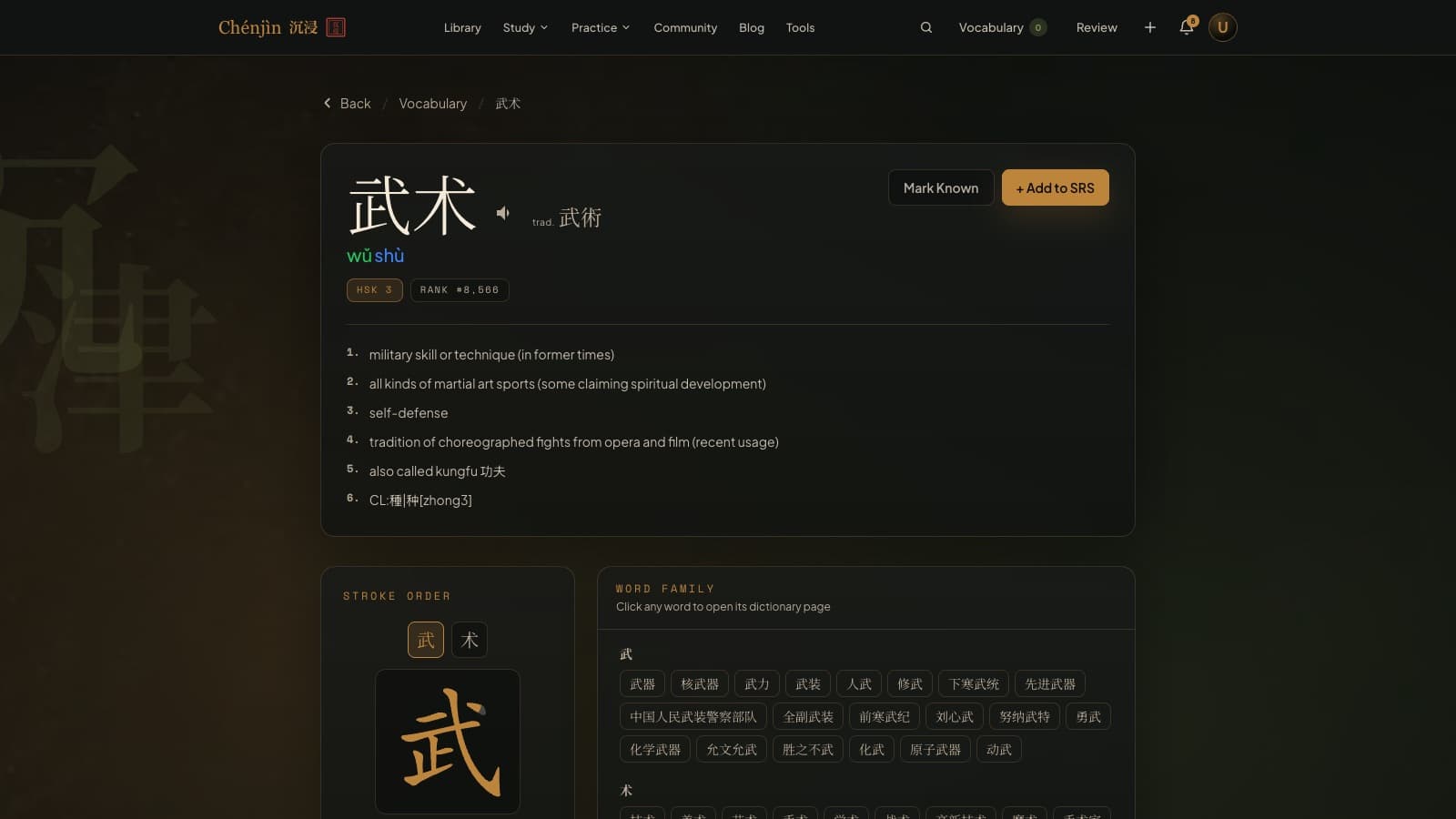
The strokes behind the shout
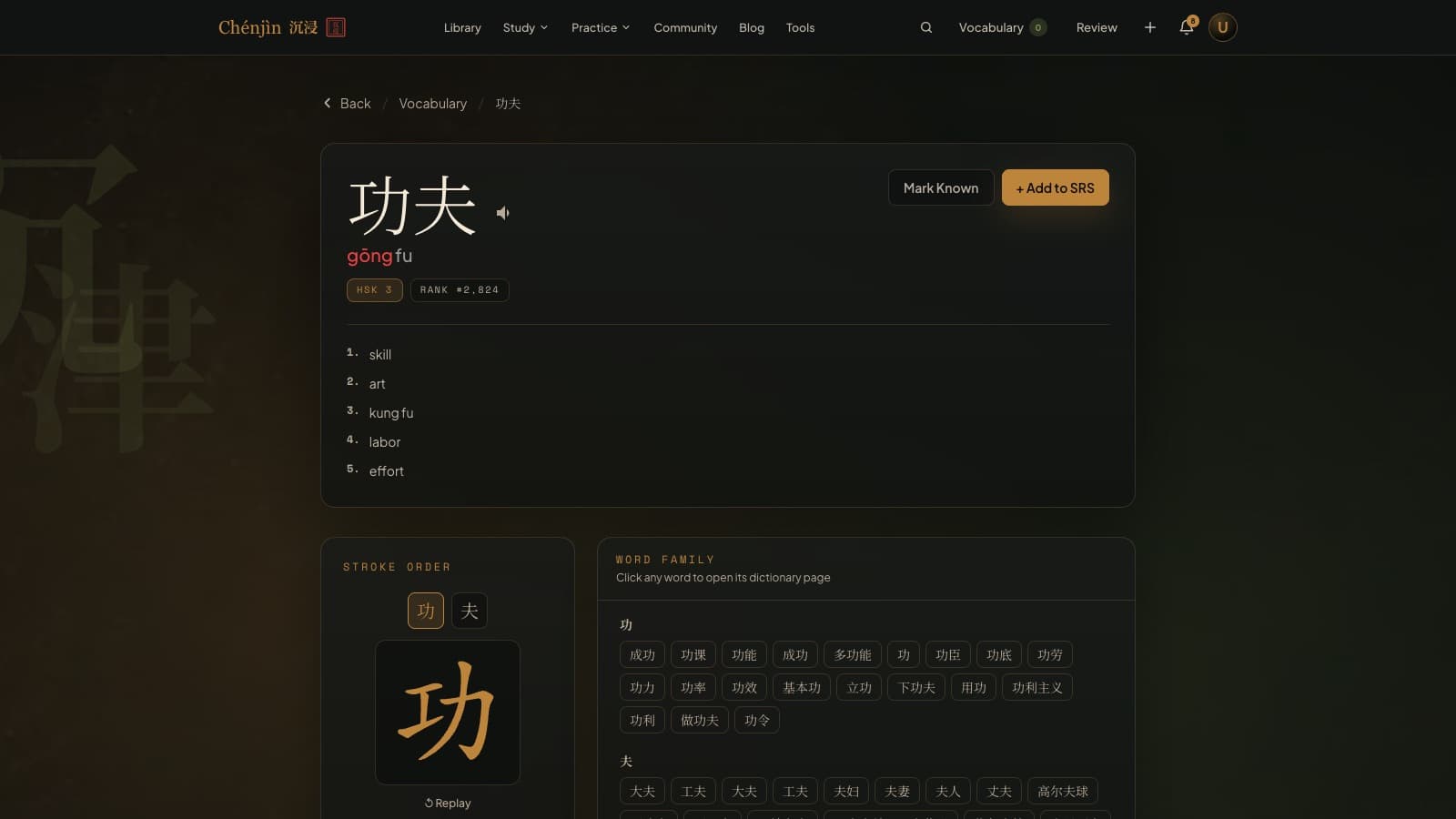
Open 功夫 and you get the stroke order animated, the radicals explained, every sense of the word, and a word family that runs from 基本功 (fundamentals) to 下功夫 (to put in the work). Each page has a speaker button and a Mark Known or Add to SRS action, so the term you've said for years finally gets its characters.
Read the generals
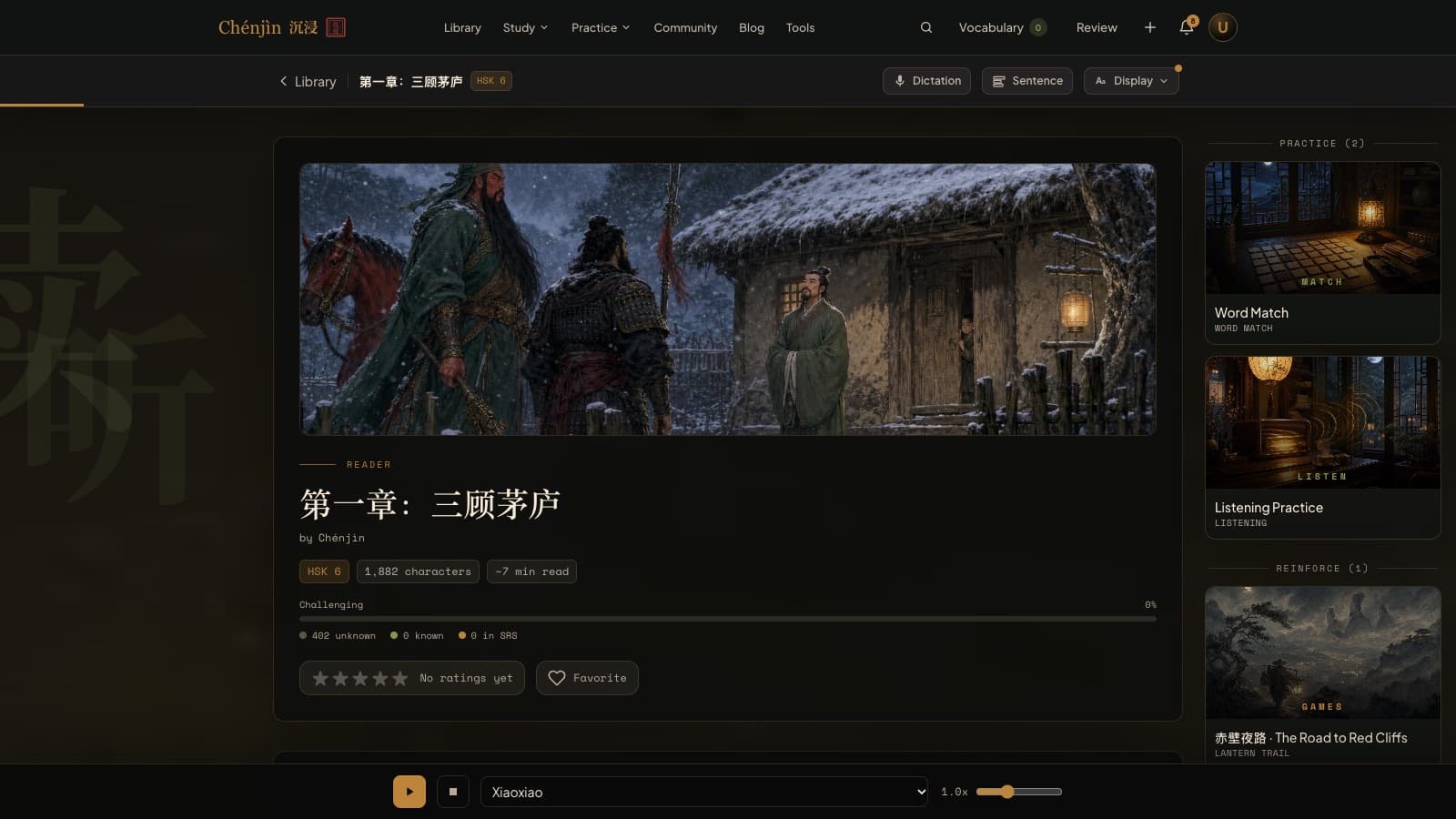
The library's retelling of the Red Cliffs arc of 三国演义 (HSK 6) puts 关羽, 张飞, and 赵云 on the page in Chinese, with the strategies and loyalties your school's stories borrow from. The monkey king's journey is there too, at HSK 5. Both tap for pinyin and meaning on every word.
Say 师父 so your teacher nods
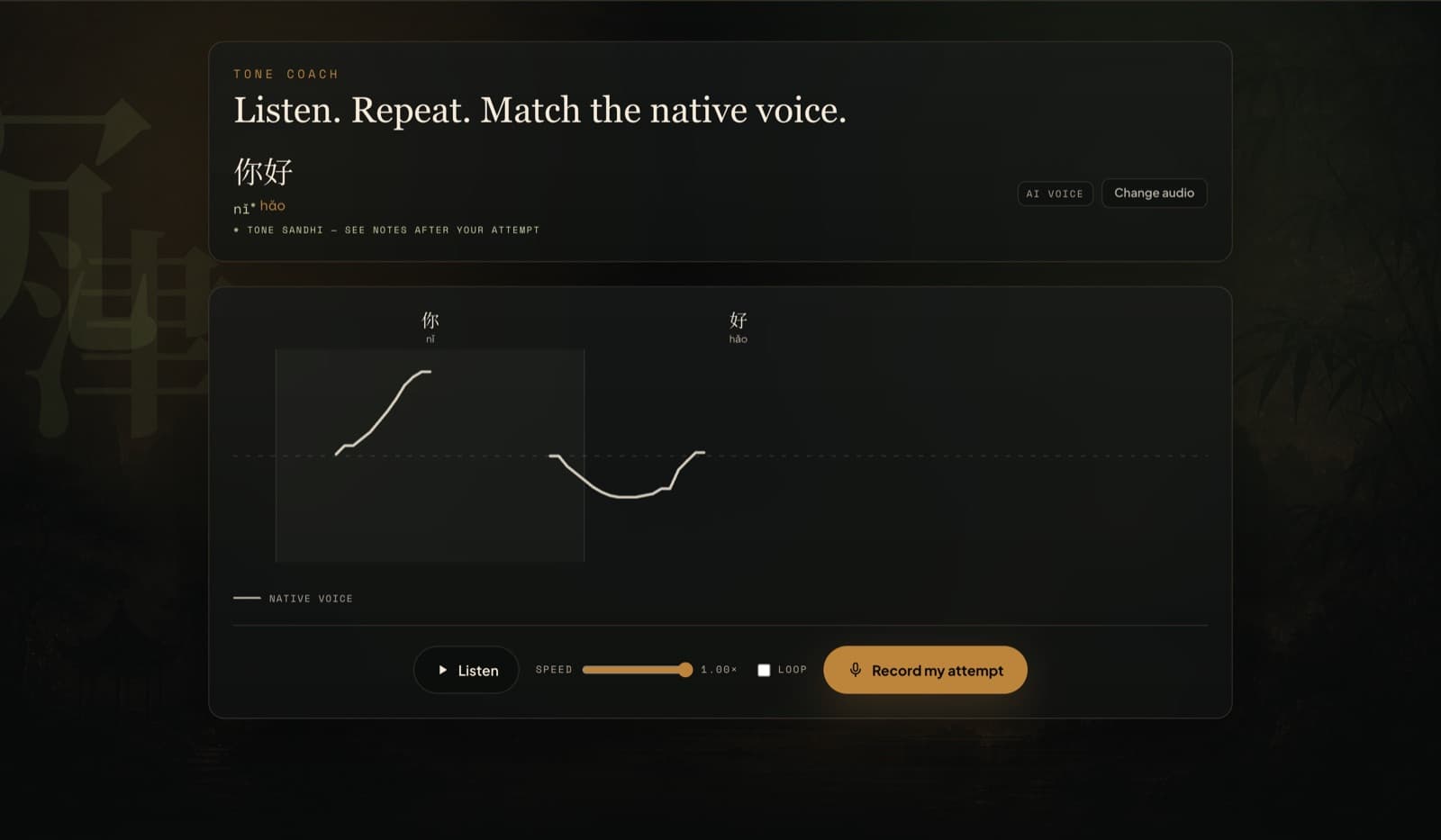
Tone Coach plays a native reference for any word or phrase, records you, and overlays your pitch curve on the native one. Shīfu is two syllables most students have been saying slightly wrong for years; five minutes with the curve usually fixes it.
Write them by hand
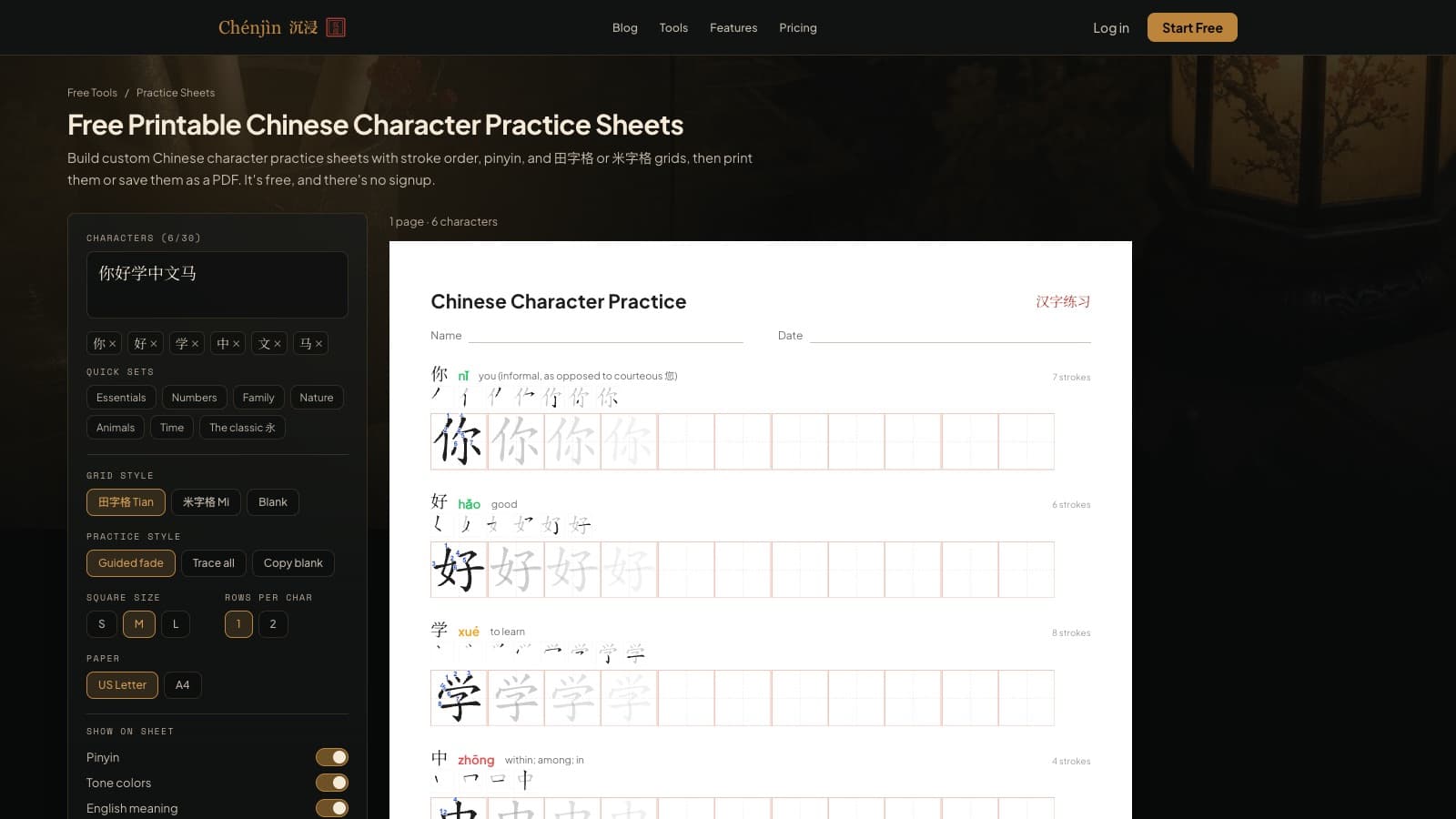
The free practice sheet generator prints 田字格 grid worksheets with stroke-order guides for any list of characters you type in, no account needed. Type the names of your forms and print.
Frequently asked questions
Will I find the names of my school's forms?
The dictionary has about 125,000 entries, so general terms, stances, and classical names are there. A school-specific form name may not be a dictionary headword; paste it into the free pinyin converter and it breaks down word by word.
I only know the terms by ear. Is that enough to start?
Yes. Type the pinyin into the vocabulary search and it suggests matching characters, like a phone keyboard. From there the character page does the rest.
My school uses Cantonese terms.
Chenjin teaches Mandarin. The characters are the same, so the reading side still applies; the pronunciation side won't. Cantonese speakers adding Mandarin have their own page.
Keep exploring
Try it tonight
The free plan includes the dictionary, the free graded reader, three library articles a day, games, and flashcards. If it fits the way you learn, the Plus plan unlocks the rest with a 7-day free trial.
Create a free accountFree forever plan · no credit card required
Complete beginner? Start from zero.