

Chinese for TCM Students Who Want to Read the Characters
Chinese for TCM students is a reading problem before it's a speaking one: herb names, formula names, and point names arrive as characters and pinyin on the same page, and memorizing them without understanding the characters is slow. Chenjin isn't a medical resource, but it explains why 药 contains the grass radical, drills a pharmacy counter by ear, and keeps your growing word list in spaced review.
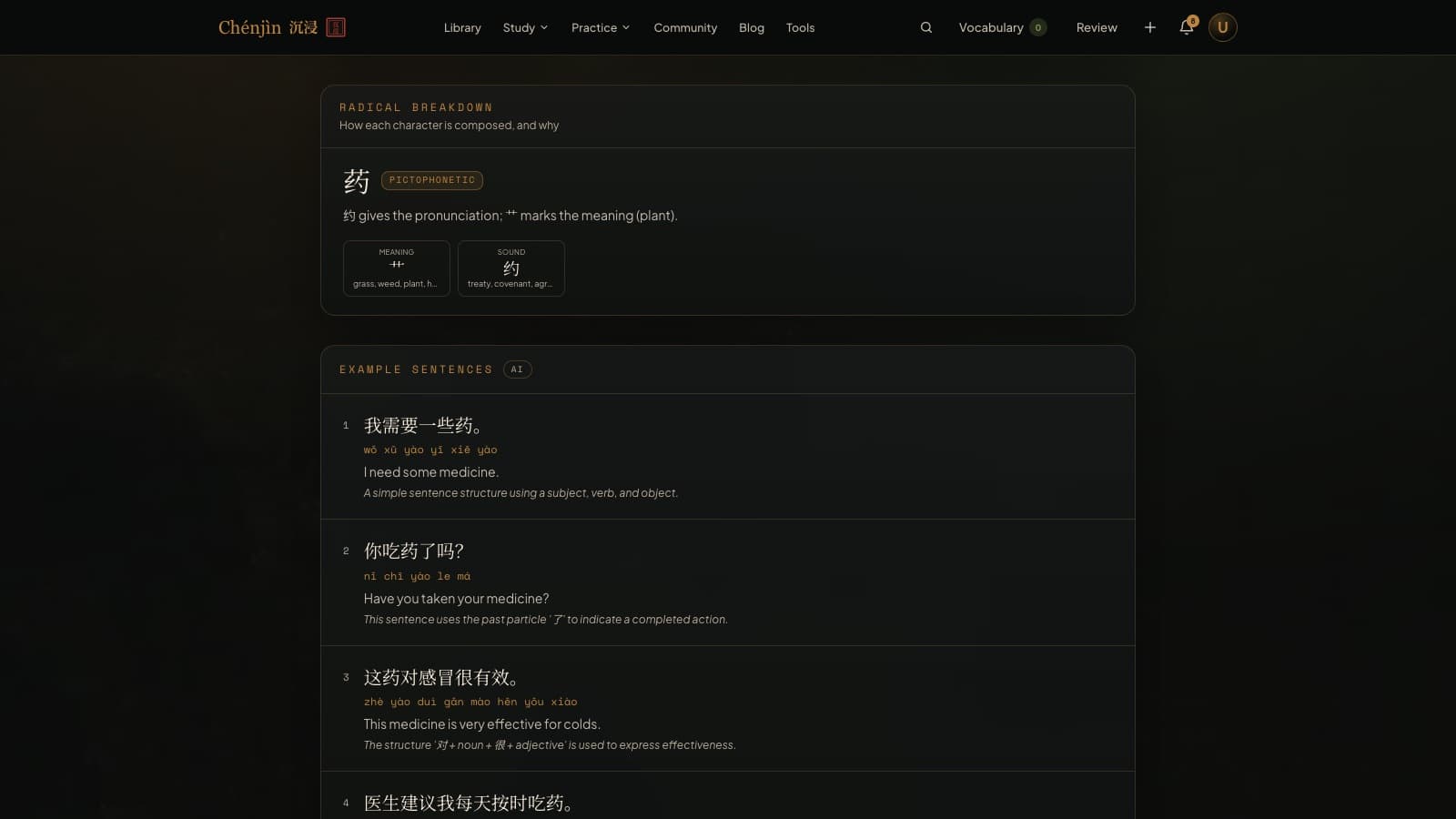
The radical tells you what the character is
Open 药 and the Radicals section explains it: 艹 marks the meaning (plant), 约 gives the sound. The same grass radical heads 草, 茶, 菊, and dozens of herb names, and 疒 heads the words for the conditions they treat. Learn the components once and the pharmacopoeia stops being a list of shapes.
Every character page also animates the stroke order, which is the part most TCM programs assume you will pick up on your own.
Hear the pharmacy counter
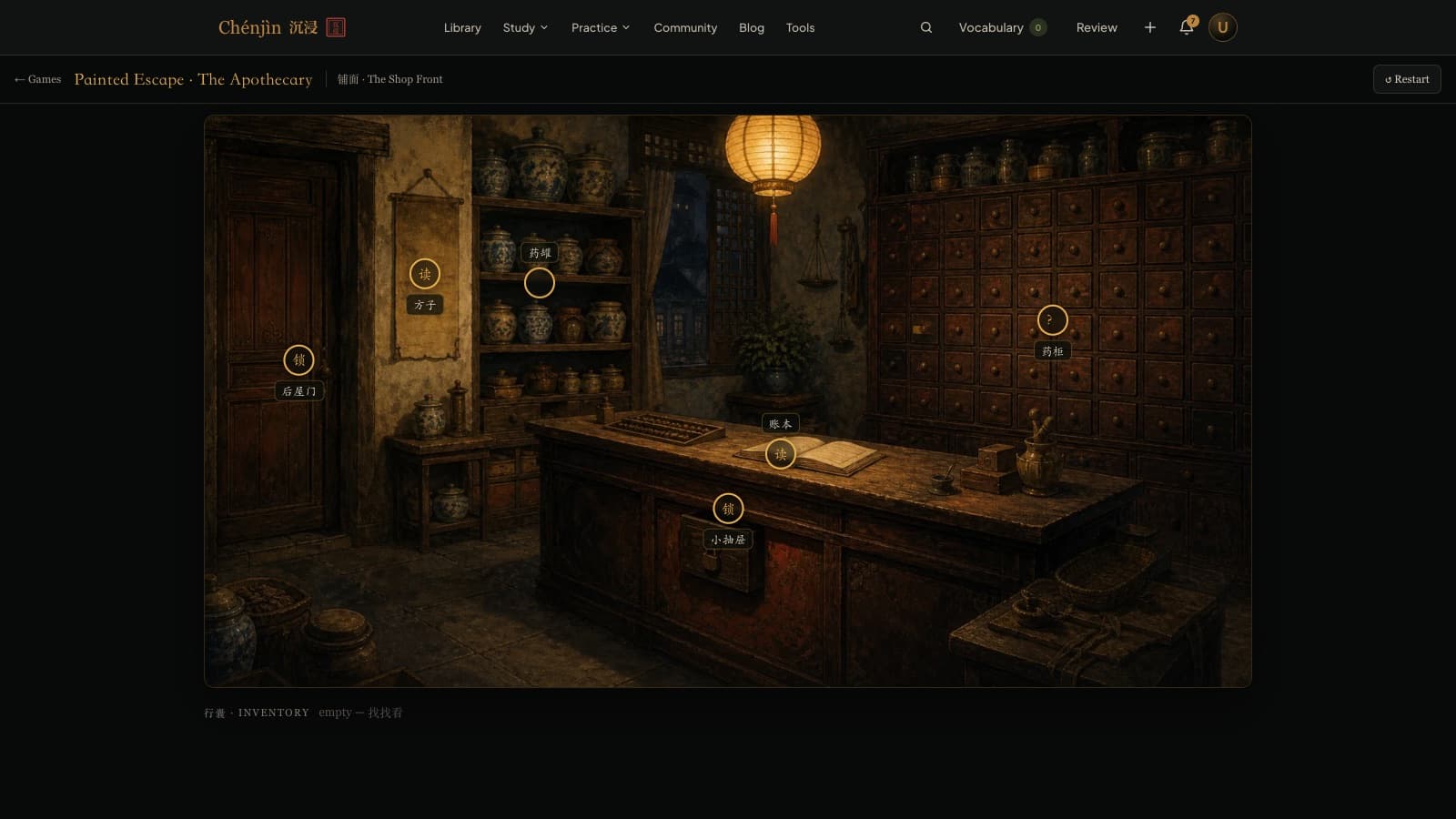
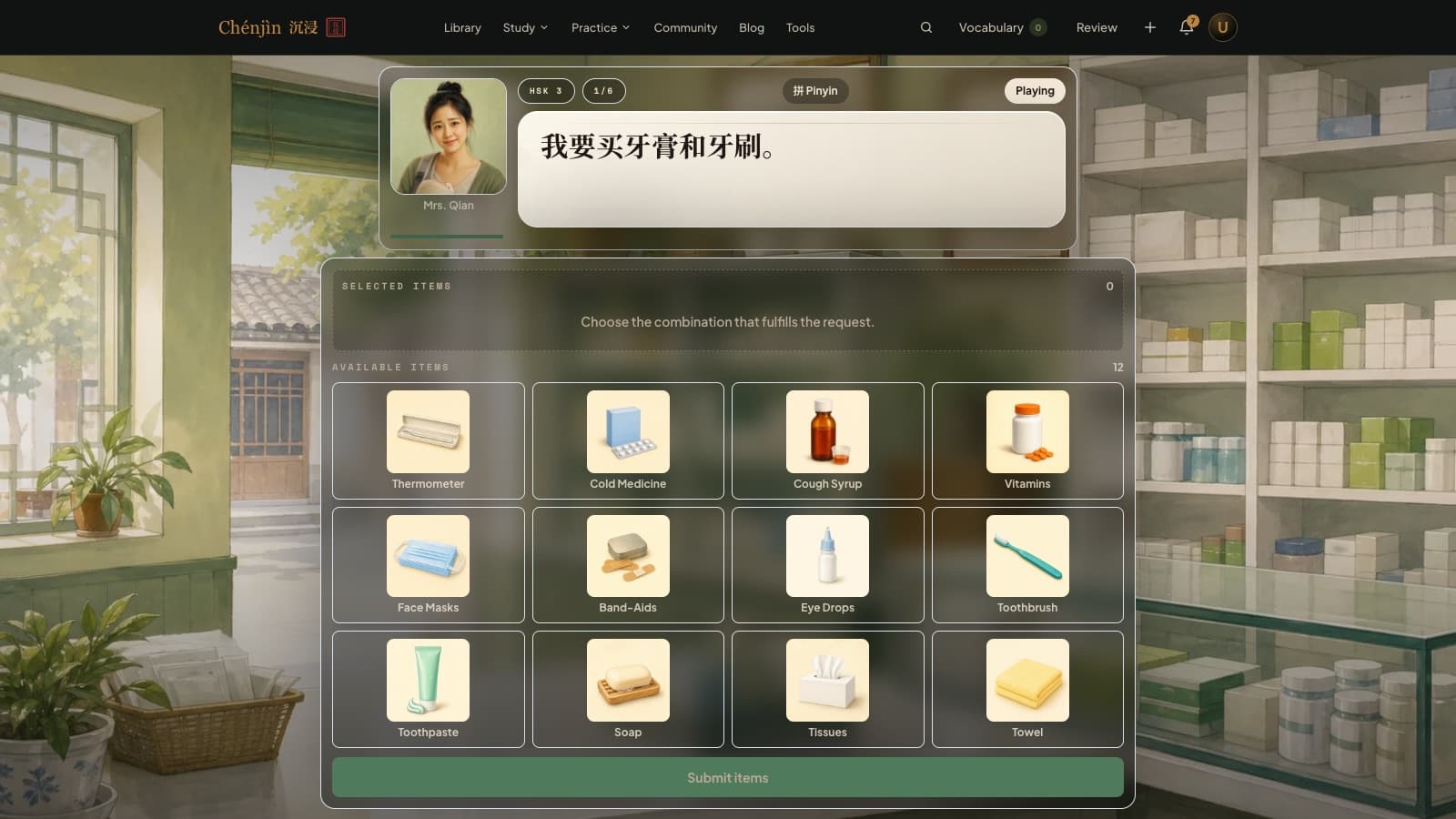
The 药店 scenario (HSK 3 to 5) has customers asking for things in spoken Chinese while you pick from the tray. Listening mode hides the text and adds a replay button and speed slider. The apothecary escape room on the hub is the same vocabulary as a puzzle.
Import the list you're already memorizing
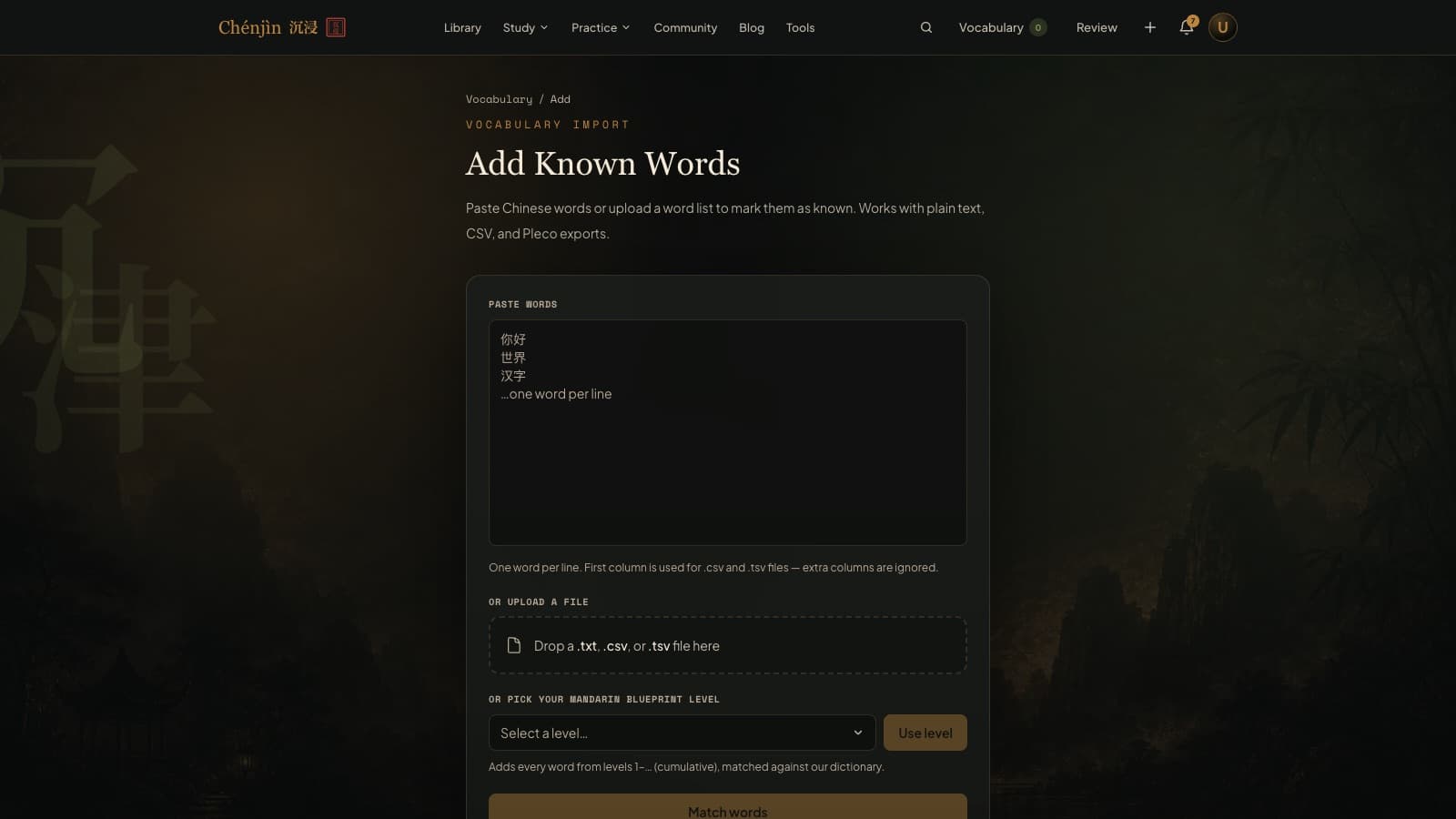
Paste your program's vocabulary list into Add Known Words and every entry that matches the dictionary gets marked known, so the reader highlights only what's new to you. Words you look up while reading go into FSRS-scheduled review, which is the right tool for a list that has to survive to the board exam.
Frequently asked questions
Does the dictionary include herb and formula names?
Common herbs like 人参, 甘草, and 当归 are standard CC-CEDICT entries and have full pages. Rarer herbs and most formula names are not dictionary headwords; the free pinyin converter still breaks them into readable parts.
Is there any clinical content?
No. Chenjin teaches the language, not the medicine. Your course materials stay the source of what the words mean in practice.
What about classical texts like the 黄帝内经?
Chenjin covers modern Mandarin. Classical Chinese grammar and vocabulary are a different system, though the character knowledge you build here carries over.
Keep exploring
Try it tonight
The free plan includes the dictionary, the free graded reader, three library articles a day, games, and flashcards. If it fits the way you learn, the Plus plan unlocks the rest with a 7-day free trial.
Create a free accountFree forever plan · no credit card required
Complete beginner? Start from zero.