

Chinese for Japanese Speakers
Chinese for Japanese speakers starts with an unfair advantage: thousands of characters whose meaning you already recognize. What's missing is the Mandarin side, the readings, the tones, and the simplified forms.
Chenjin turns recognition into reading: pinyin exactly where you want it, audio on every word, and pitch feedback for a tone system kanji never taught you.
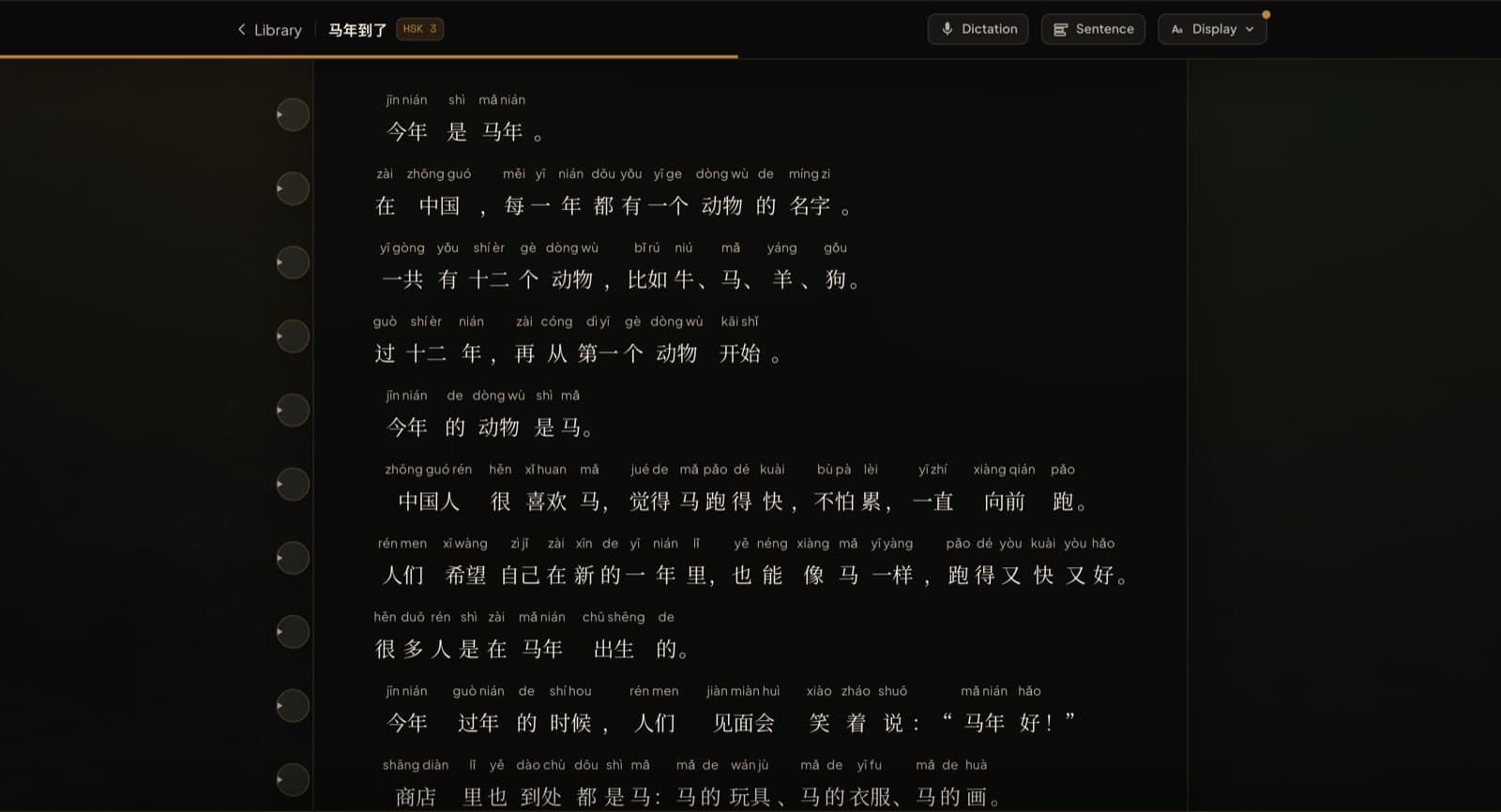
Attach Mandarin readings to characters you know
Reading is where your head start pays out: you can often guess what a sentence means before you can say a word of it. The reader puts pinyin above the words you haven't learned and audio one tap away, so every article quietly overwrites on'yomi with Mandarin.
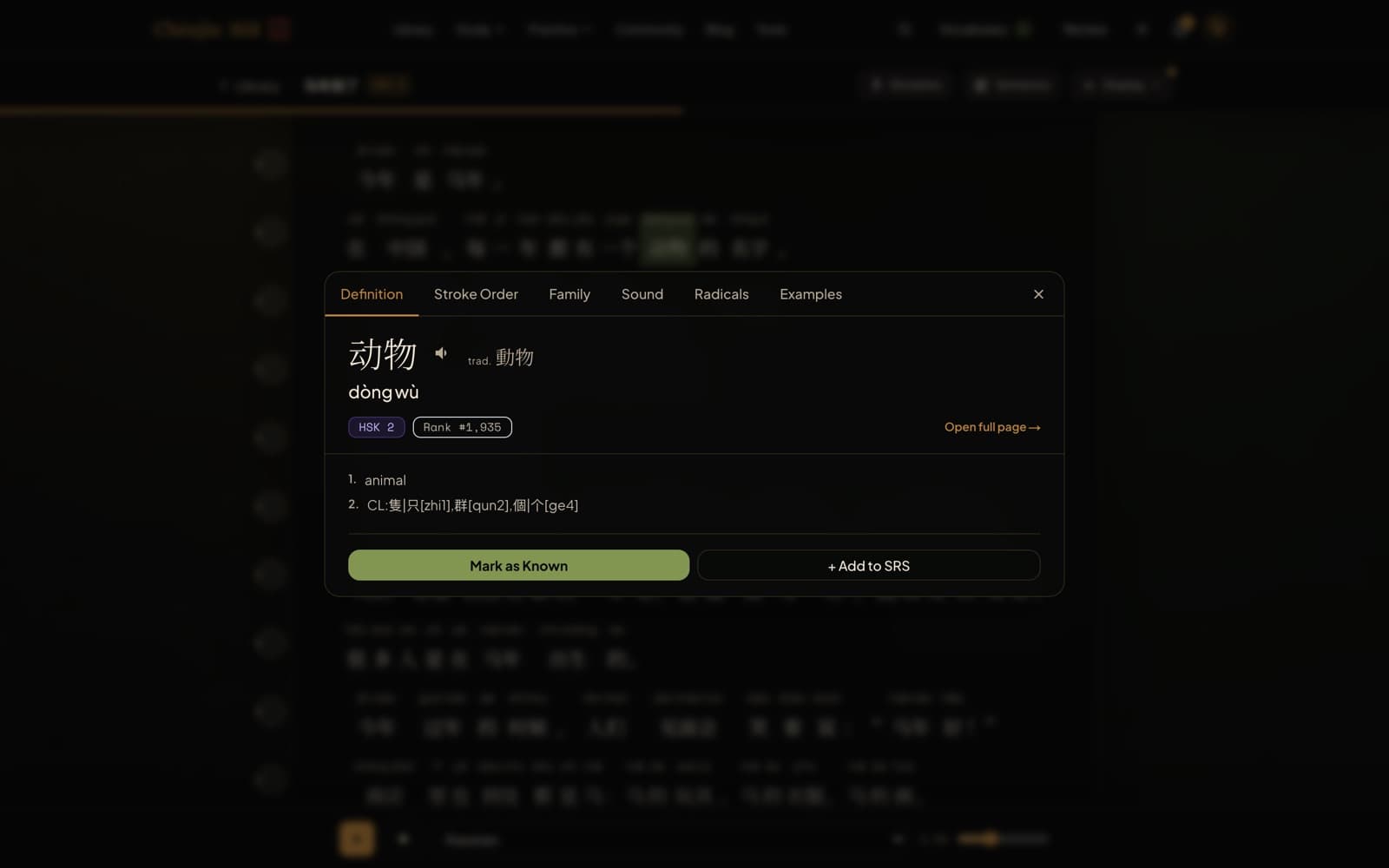
Map your kanji onto simplified forms
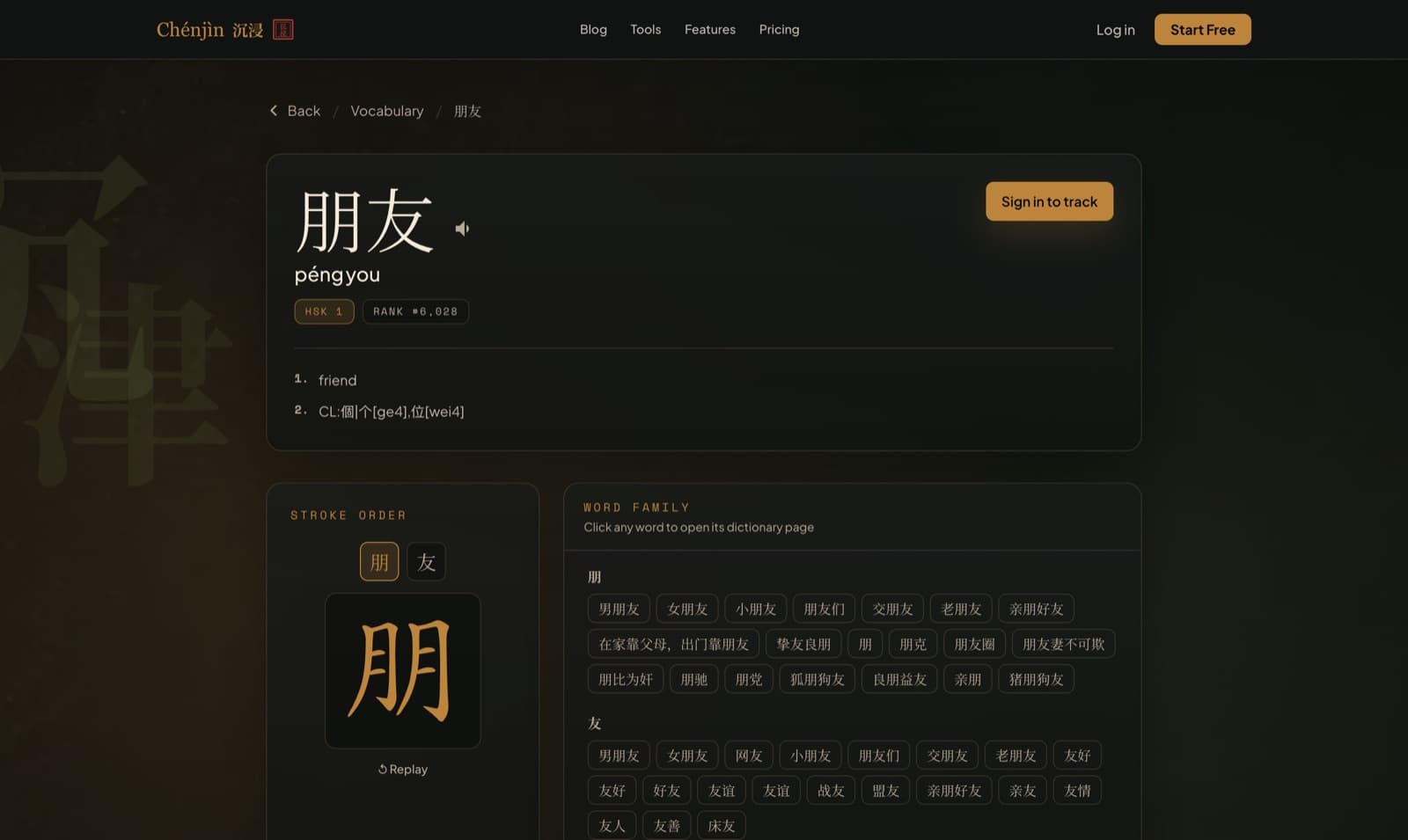
Mainland Chinese uses simplified characters, and Japanese kept forms that are often closer to the traditional ones. Every Chenjin dictionary entry shows simplified and traditional side by side, so you can hang the new form on the one you already recognize.
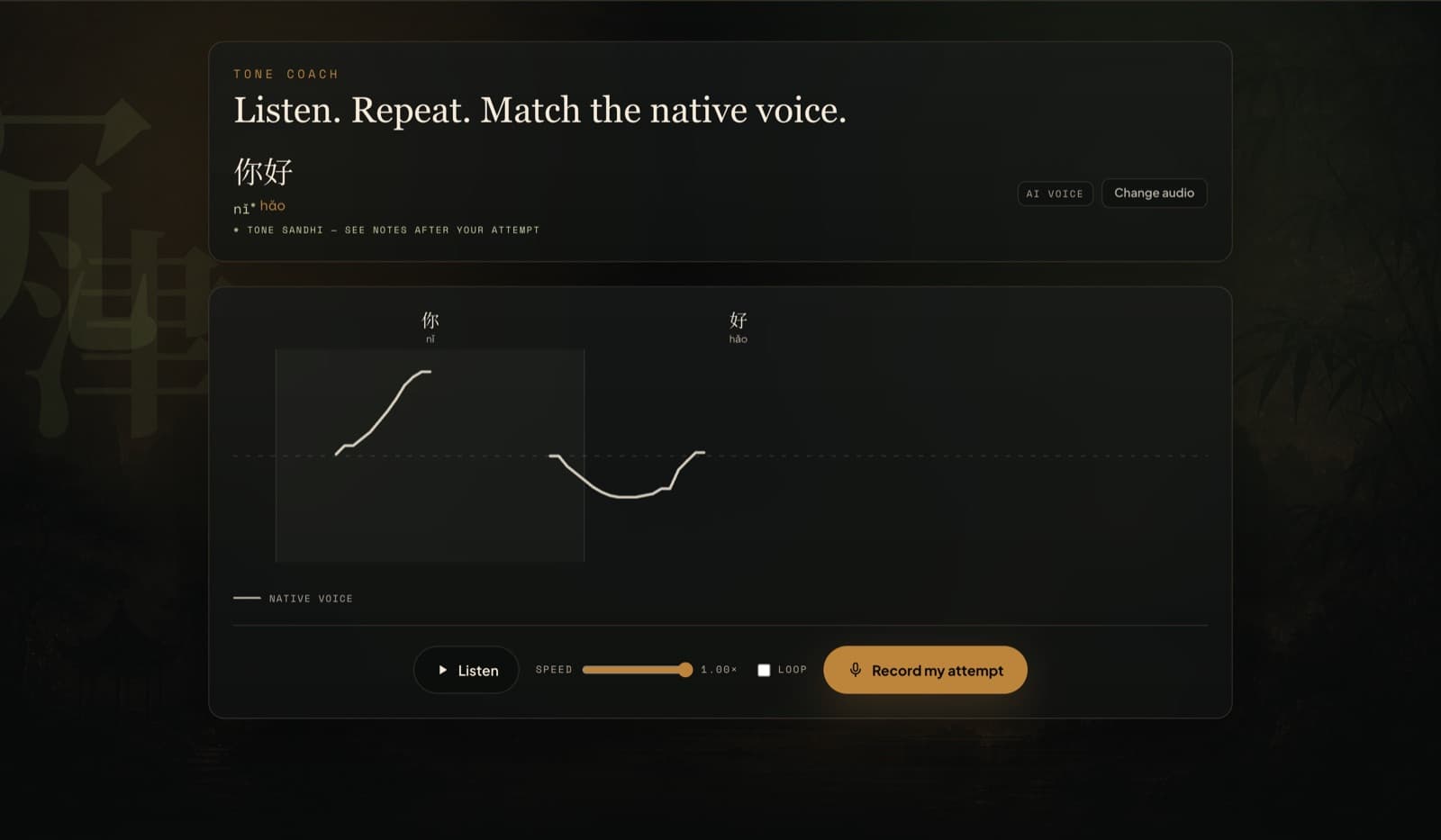
Tones, from zero, made visible
Tones are the one part of Mandarin where your Japanese gives you nothing. Tone Coach plays a native speaker, records your imitation, and overlays your pitch curve on theirs so the difference is something you can see, not just fail to hear. Plus plan, 7-day free trial.
Frequently asked questions
How much of my kanji knowledge transfers?
Most characters are recognizable and their core meanings usually carry, which makes reading dramatically easier from day one. Readings don't transfer, and there are famous false friends (手紙 means toilet paper in Chinese), which the tap dictionary catches the moment you meet them.
Should I study simplified or keep leaning on familiar forms?
Learn simplified if the mainland is your goal; the dictionary's side-by-side display makes the mapping mostly painless. If Taiwan is your goal, the reader can display traditional throughout.
Where should I start?
Straight into graded reading, higher than a true beginner would. Mark familiar vocabulary as known on the vocabulary map, let the difficulty meter find your real level, and spend your saved time on tones and listening.
Keep exploring
Try it tonight
The free plan includes the dictionary, the free graded reader, three library articles a day, games, and flashcards. If it fits the way you learn, the Plus plan unlocks the rest with a 7-day free trial.
Create a free accountFree forever plan · no credit card required